A tourist’s guide to Jerez
The what, where and when of Spain’s flamenco capital
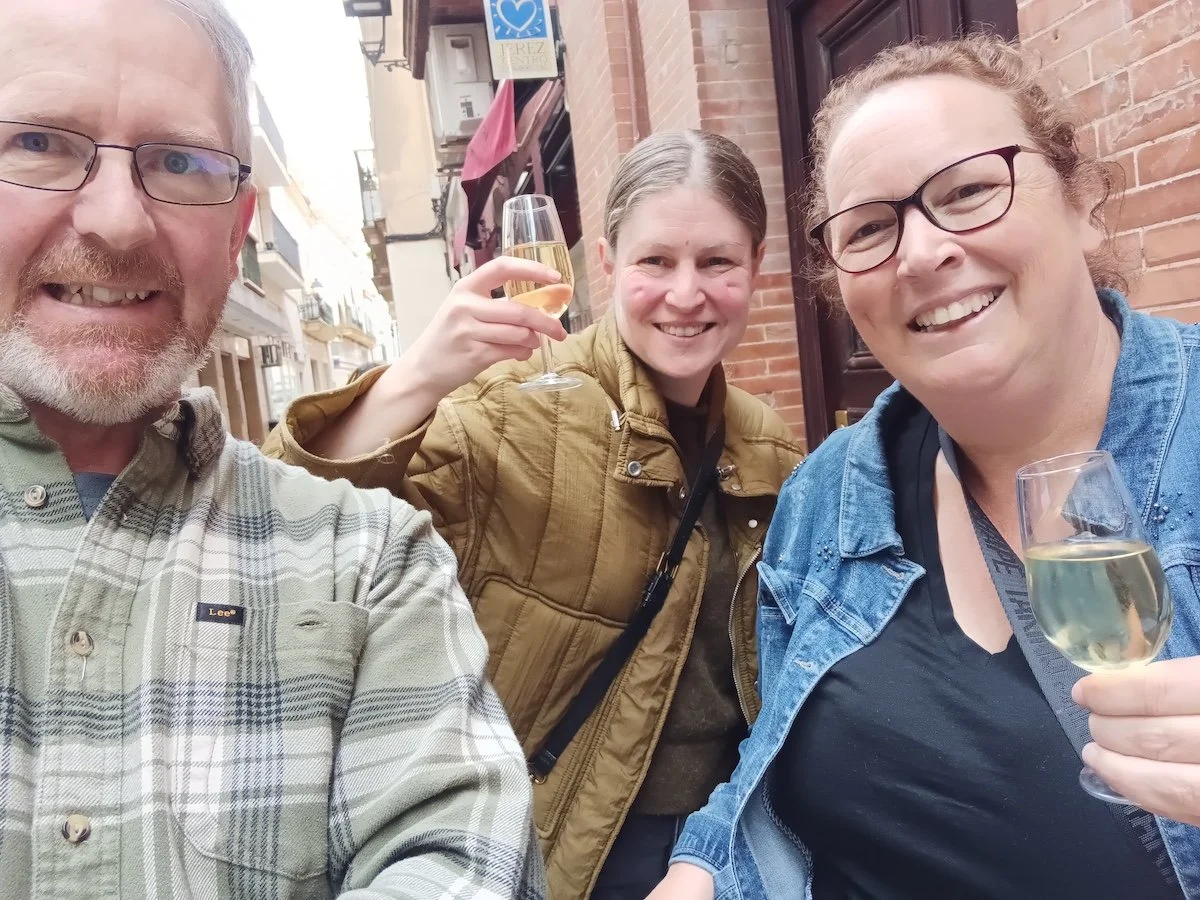
Welcome to Jerez!
In many of Spain’s cities – particularly those with a beach – visitor numbers are somewhat predictable. They swell from June through August as the Great Unburnt seek their time in the sun (and then likely some aloe vera). That Jerez doesn’t have a beach is one of the reasons we love it – we spent our first 18 months in Spain living in a beachy town and cursing all the bloody visitors during summer taking up space at our favourite bars and not wiping their feet.
In contrast, the population of Jerez bubbles and bursts to the rhythm of its plethoric festivals and events, not with the weather. Many a visitor to our town has unexpectedly found himself at the mercy of a flood of visitors from far and wide jamming the alleys and bars, all here to witness one of the age-old traditions that they all knew was coming but you didn’t. Most of these amazing community celebrations won’t affect your stay, or hotel prices, or your ability to find a table at a bar, but there are some events that bring the city to … what’s the opposite of a standstill? A figurative explosion of heaving horses, marching bands, flamenco, food trucks, concerts, pop-up bars, and portable toilets of questionable aesthetic grasps the city by the throat and doesn’t let go until everyone has had enough, usually about a week later. Jerezanos know how to party, and they do so with high frequency and vigour and, most importantly, they do so as a community.
So, what follows is my guide to Jerez’s major festivals, so you can decide for yourself whether to visit and enjoy the fun, or schedule your stay for when the city is at its (slightly) more sedate. I’ve added a list of things you can do year round, and made some observations on the best places to buy new underpants.
Beginning with …
Semana Santa (Holy Week, Easter)
The action begins to ramp up about 10 days before Easter, as each of the city’s three dozen or so church ‘brotherhoods’ readies their floats for a parade through the town. Each procession features two floats, one with a life-size version of Jesus followed by another carrying his mum, with bespoke accoutrements adding to the effect. A float can weight 5000 kg and is backboned by 30 or more strong guys, who climb beneath, and on the count hoist the frame off the ground ready for the slow trudge onward. Of course, from under their concealing curtain they can’t see a thing and need guidance from in front by someone with a keen eye for potholes and dog poop. Up narrow alleys and wide avenues they shuffle in perfect time, moving at snail’s pace as the float wobbles precariously above, through vast crowds of cheering – and in many cases weeping – Spanish yahoo-istas (this is not a real word but it should be).
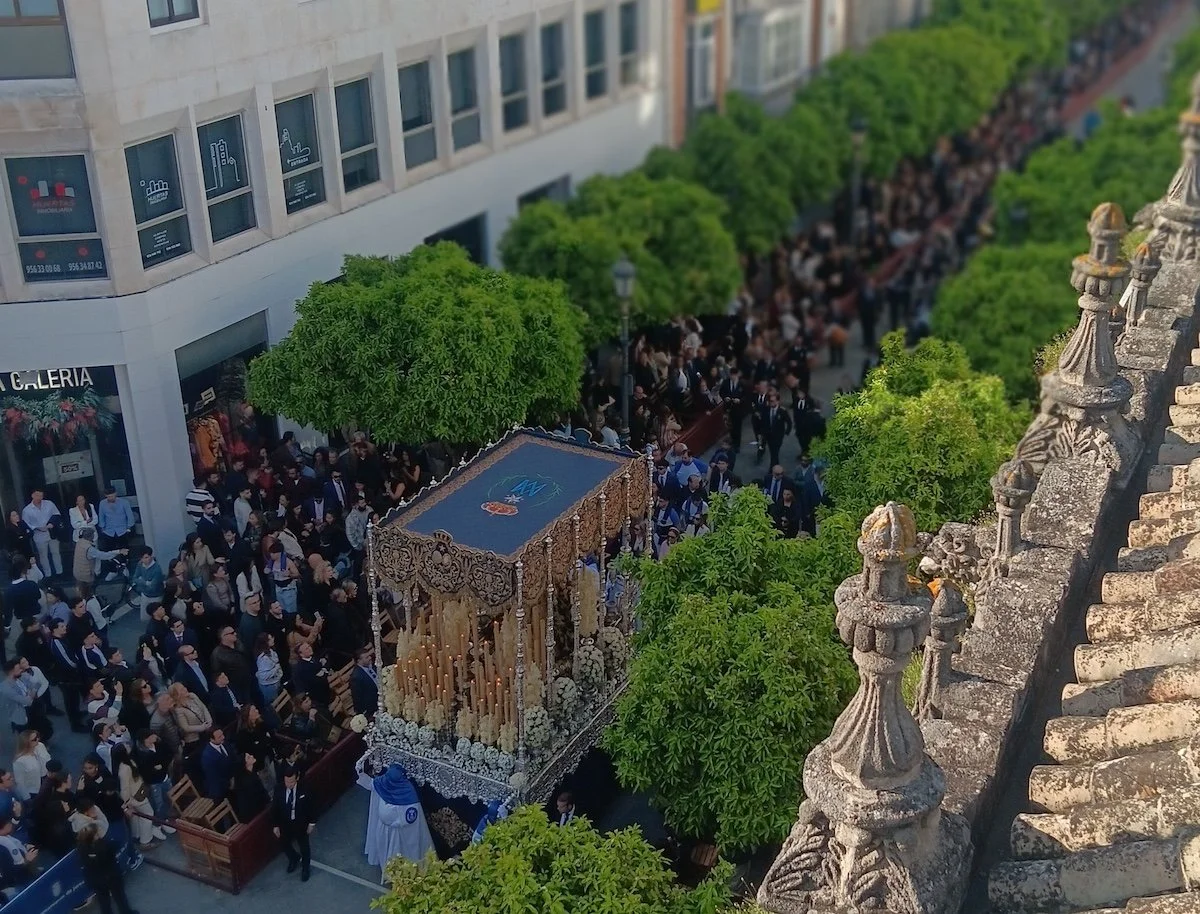
This was the view from our friends’ place in Calle Larga in the centre of Jerez. I don’t have a camera big enough to capture the true scale of these processions – and this is just one of five going around the city at one time.
On the Sunday before Good Friday, five or six brotherhoods kick off proceedings as the first to march, following different routes through the city from their home church and back again. At some point on their route they must traverse Jerez’s main street, Calle Larga (‘Long Street’), where thousands assemble in demountable spectator stands to spend the day watching the processions pass by. Mobile revellers will find a vantage point on the street, then once a troupe has passed they’ll rush to a new spot to catch their next favourite. You can track the movement of each procession on an app with real-time GPS.
Some processions will march for 10 hours or more. Seriously. And it’s not just the floats – each group is accompanied by one or more brass band, dozens of nazarenos of all ages in full costume, and accompanying attendants. A procession can stretch hundreds of metres. It’s solemn and somehow extremely exciting at the same time. The noise of the bands and the crowd is truly unique and will have the hairs on your various bits and pieces standing on end.
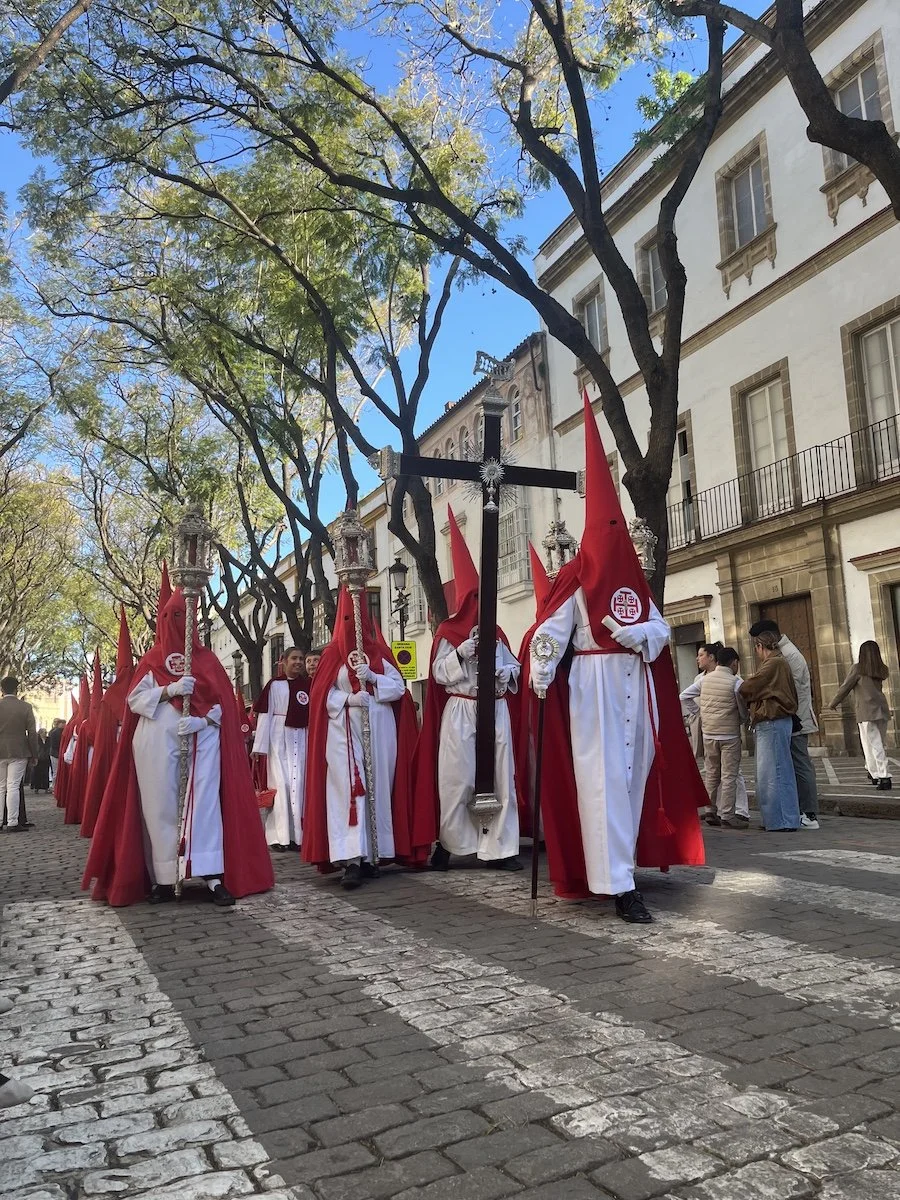
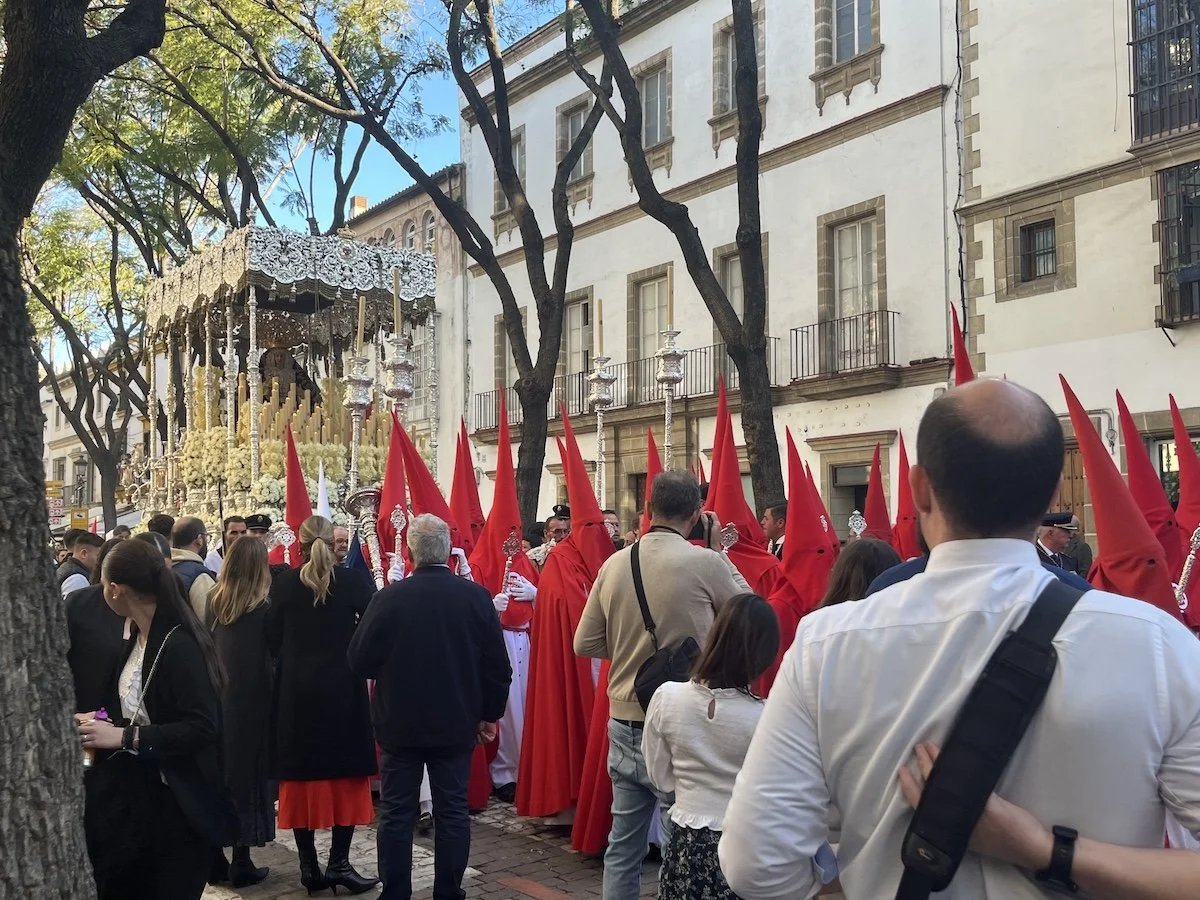
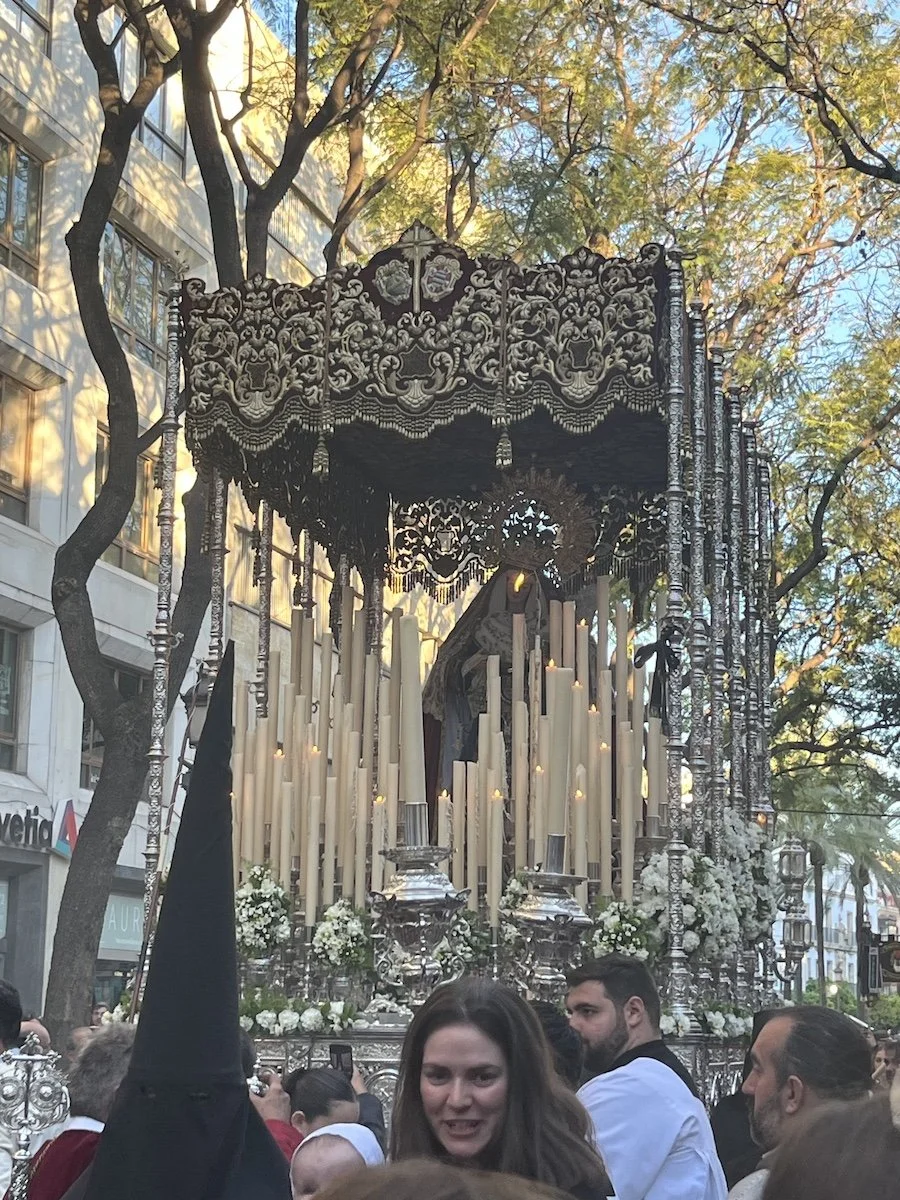
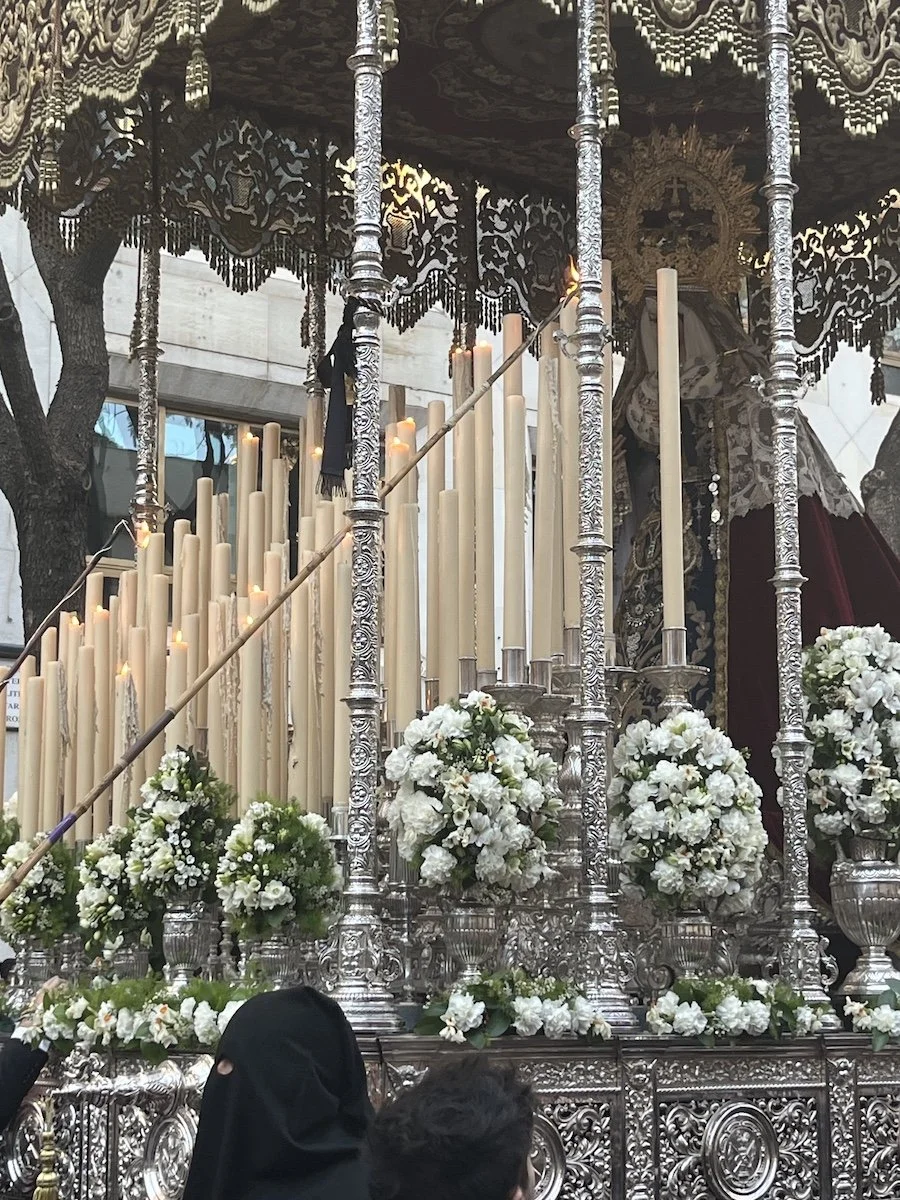
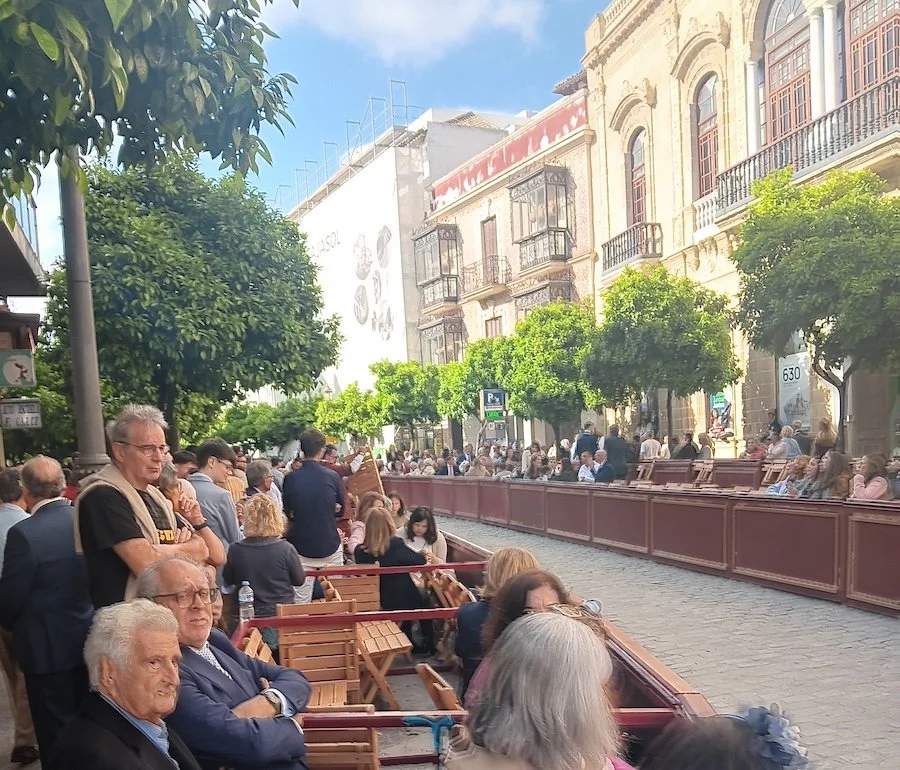
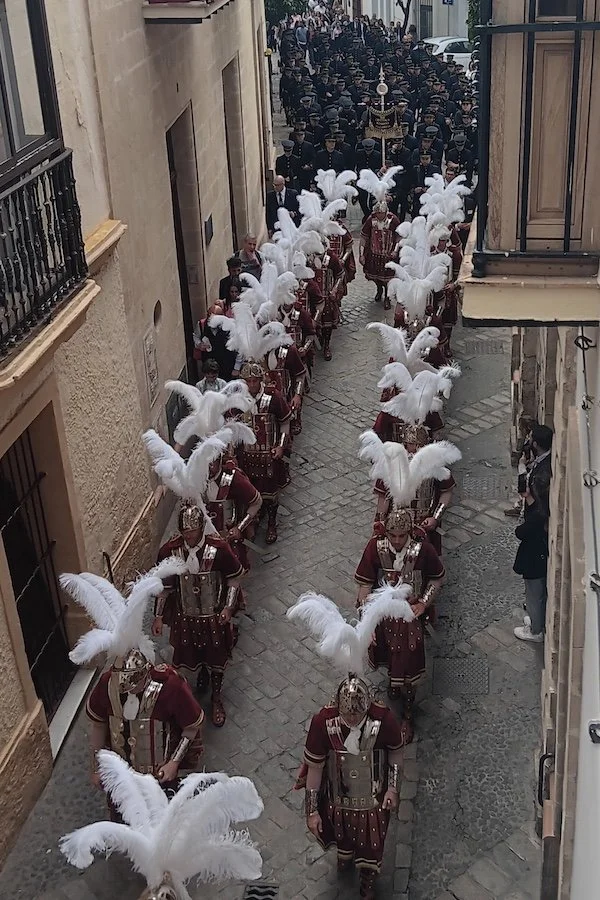
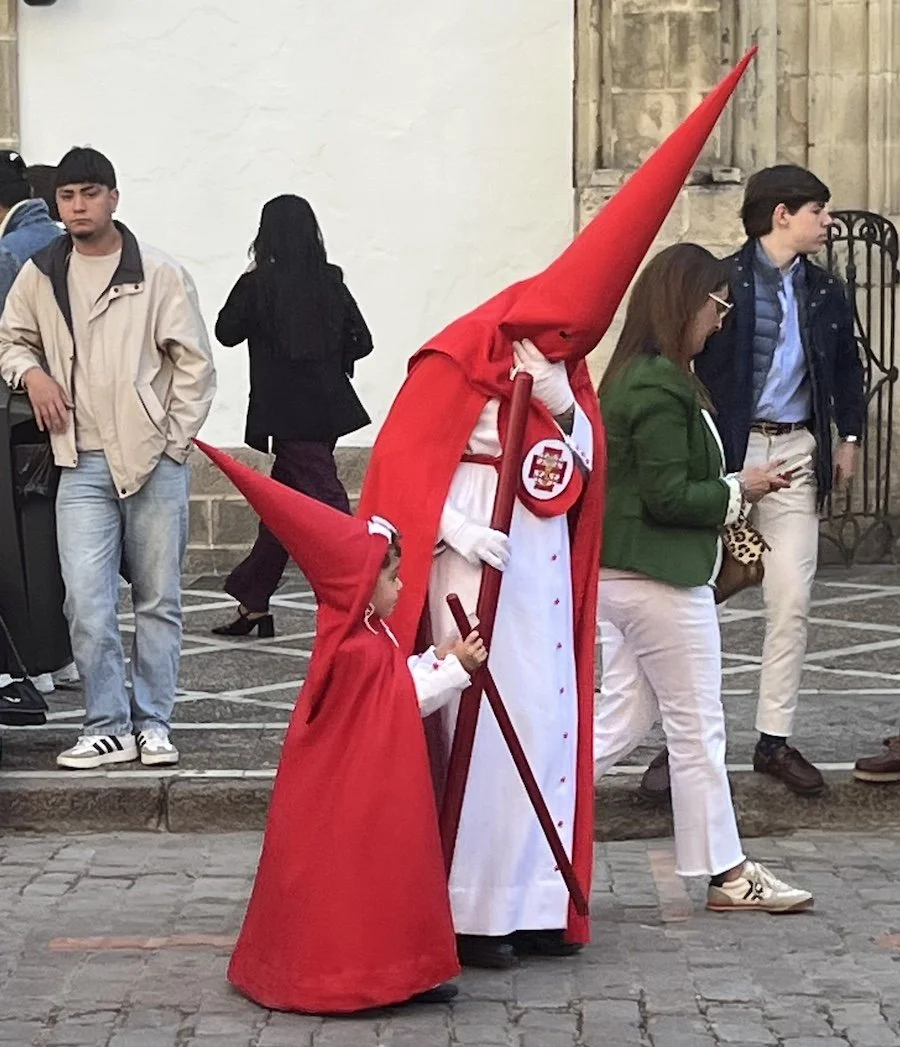
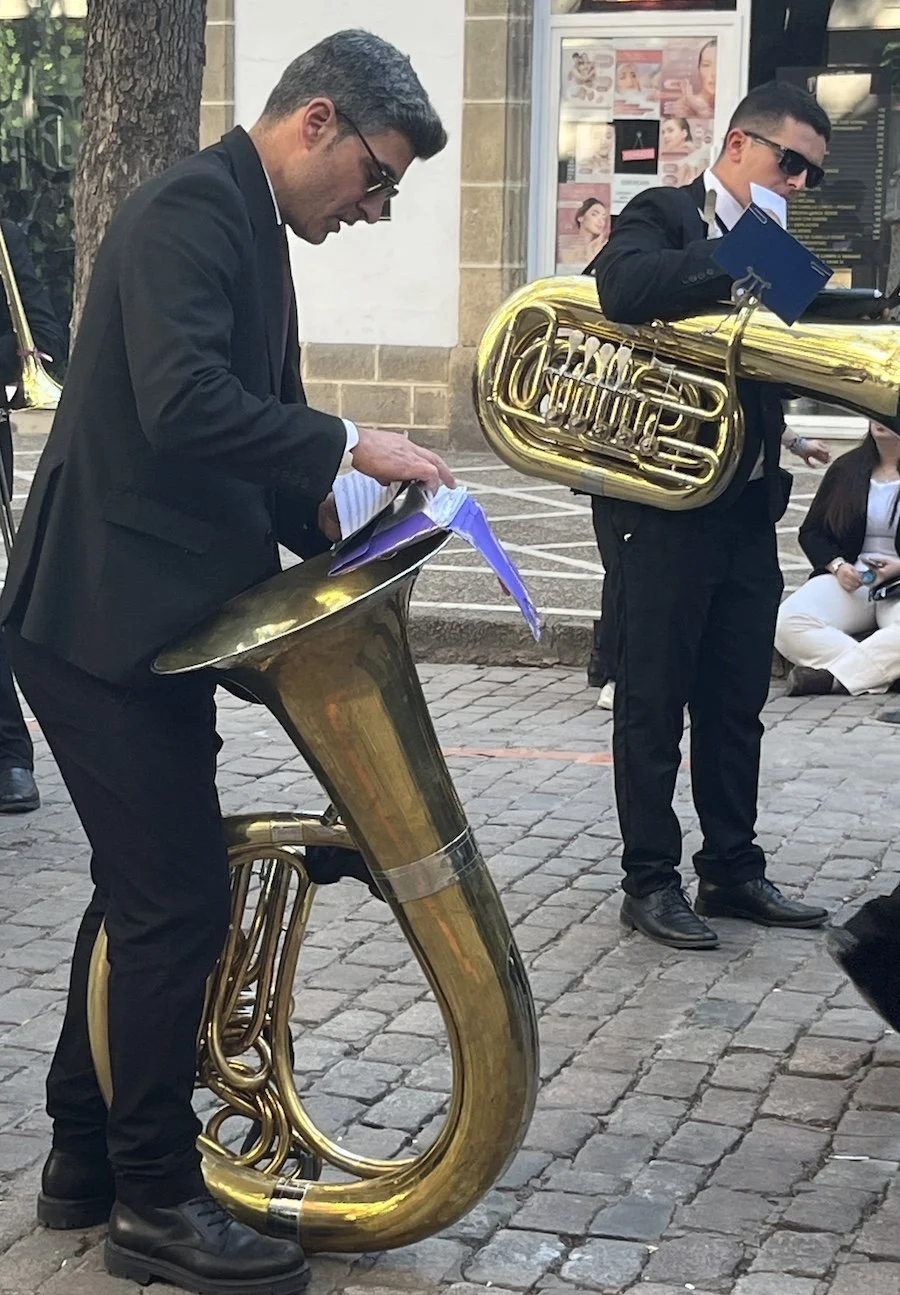
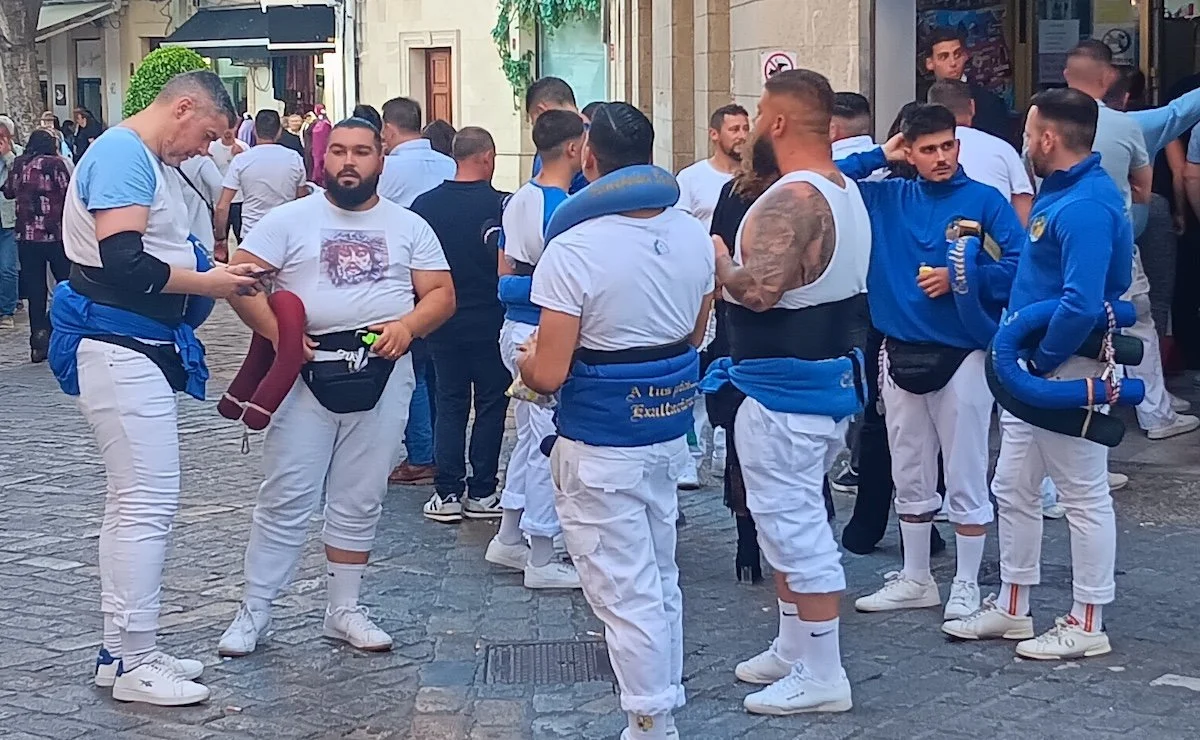
‘Costaleros’, the guys carrying the floats, need a break every hour or so. Changing shift is like a Formula-One pit stop.
The streets can be gridlocked with processions, and unless there’s a dedicated police-manned crossing it’s possible to become marooned among the masses for quite some time. It’s happened to us more than once and we’ve since vowed to choose our viewing/drinking spots closer to home, somewhere without the need to cross any of the main routes.
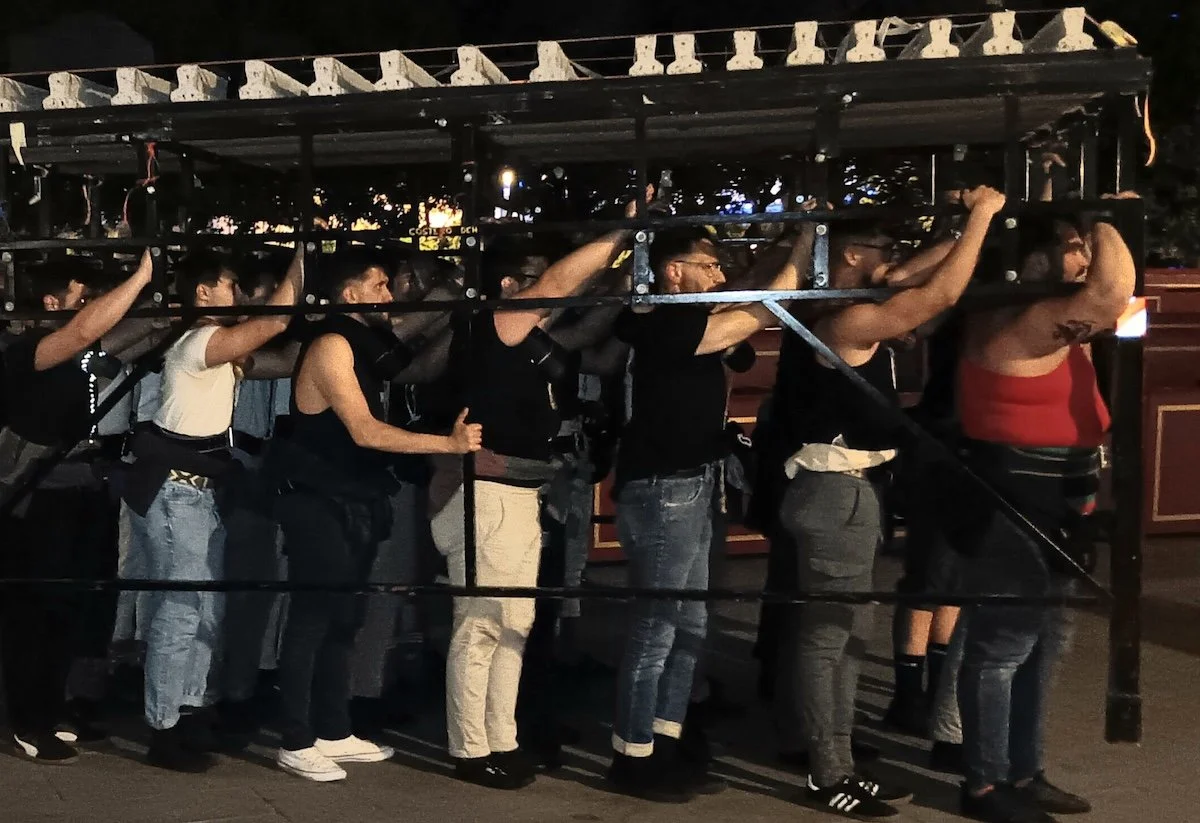
Costaleros practising their technique in the lead up to Semana Santa.
Semana Santa winds up on Easter Sunday, with only a couple of remnant celebratory activities still going on. Everyone goes home for lunch with their family – and the city makes a big sigh of relief.
If you’re not Spanish it’s unlikely you’ve ever seen anything like the Semana Santa processions. Visit and rejoice, but be prepared for sensory overload, high hotel prices, and possibly some new eardrums.
MotoGP (April)
One cloudy afternoon, 3000 motorbikes roared up our street and in a (relatively) orderly manner found a parking spot. Calle Porvera had been cleared out for the occasion and became the finish point for the caravan of bikes riding from the Jerez racing circuit to the centre of the city to mark the opening of MotoGP weekend.
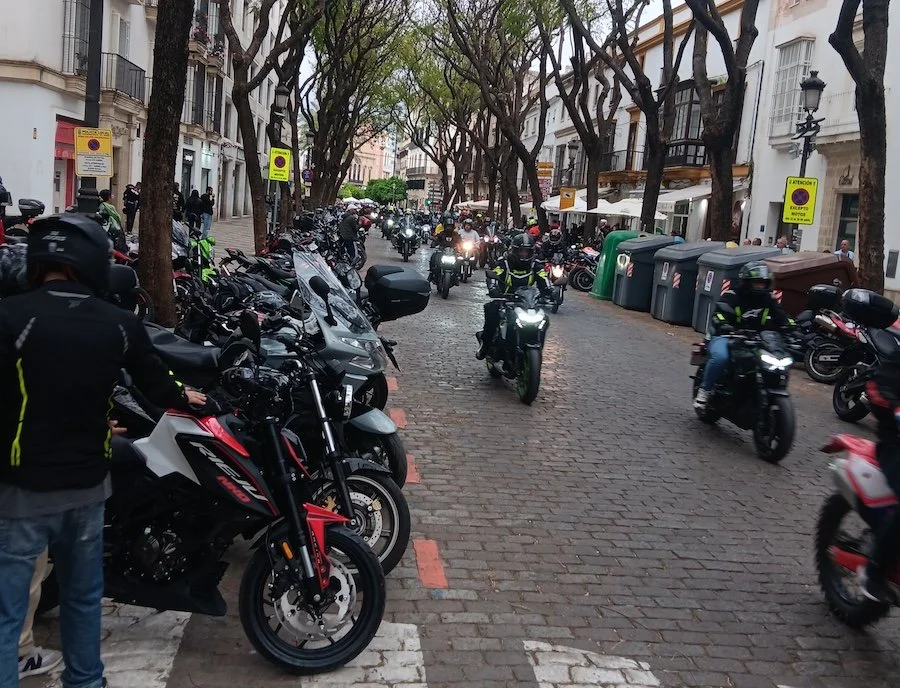
One of the biggest events on the world motorcycling calendar, the Jerez MotoGP attracts an entourage that’s as loud as you’d expect. While the authorities keep a firm grip on the handlebars of any bad behaviour, it is not and never will be possible to prevent a 30-year-old man from disengaging the clutch and revving the engine of his high-powered motorcycle to demonstrate that were he given the chance he could give Marc Márquez a run for his money on the track. It’s loud, exciting fun – but of course it’s not for everybody.
There are four days of concerts, food trucks and displays spread around the city, even while the die-hards are at the track catching the sun, sounds and carbon monoxide poisoning of the races. The highlight for me was the free vintage vehicle display held in the Cloisters in the CBD.
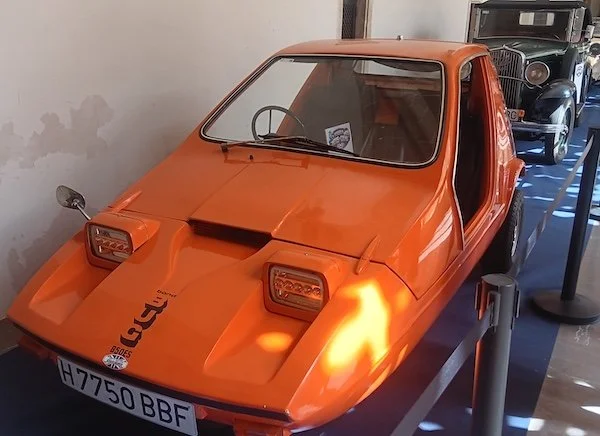

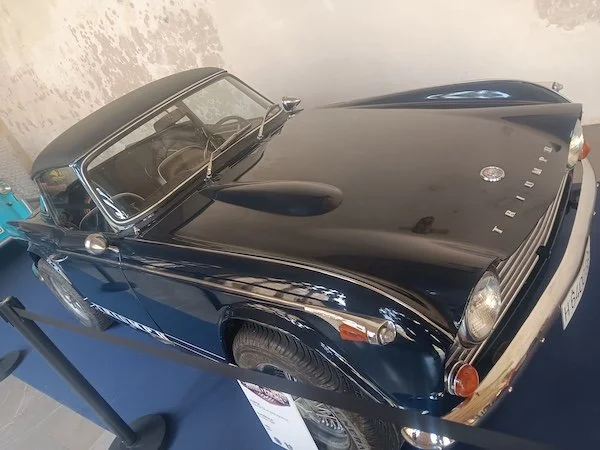
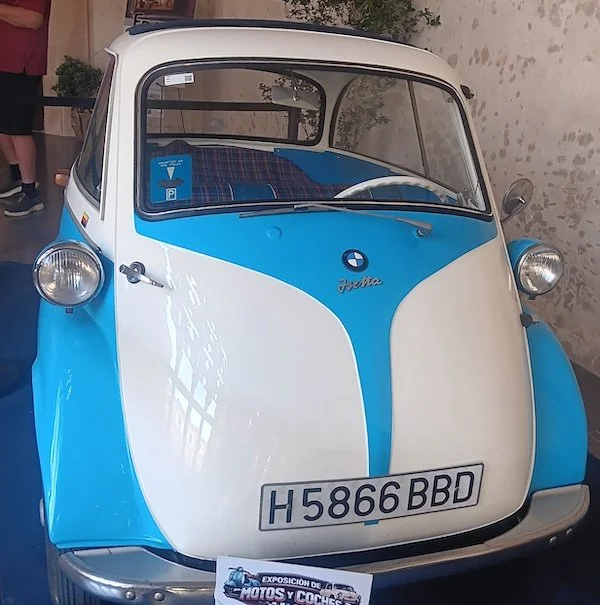
Fifteen minutes’ walk up the main drag out out of the city is motorcycle HQ, where they cordon off the whole highway to hold minibike races and stunt shows, and to showcase the latest in bandages and slings from Thursday through Saturday.
But don’t let the stereotypical image of bikers deter you from getting involved. Noisy, yes, but this event attracts enthusiasts of all ages and backgrounds and everyone is here to have harmless fun. For the locals, it’s just another fiesta, one that the city has proudly embraced since 1985.
Feria horse fair (May)
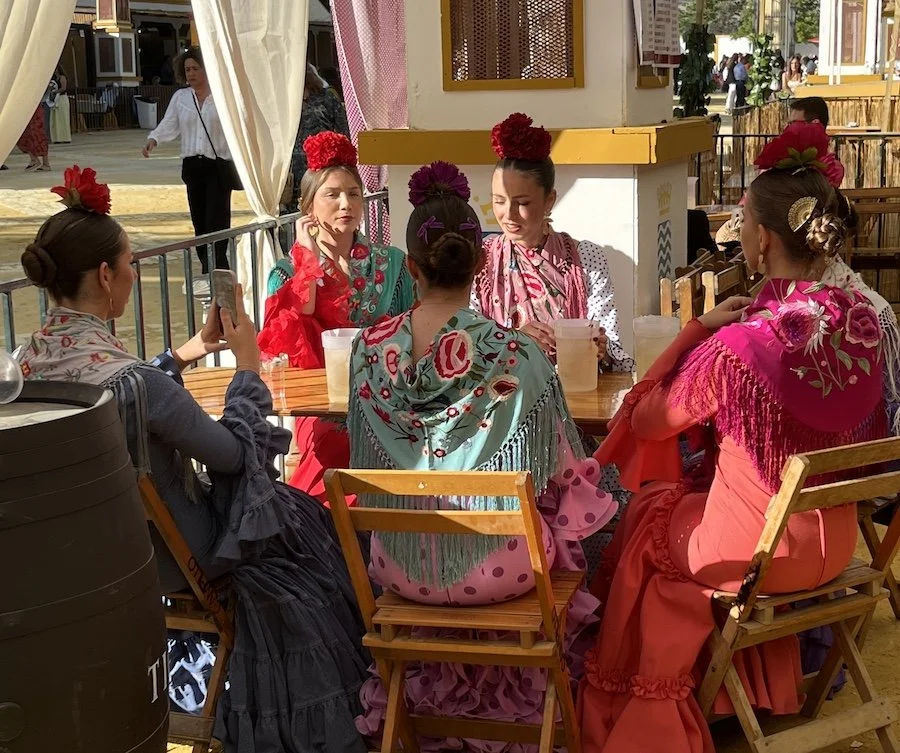
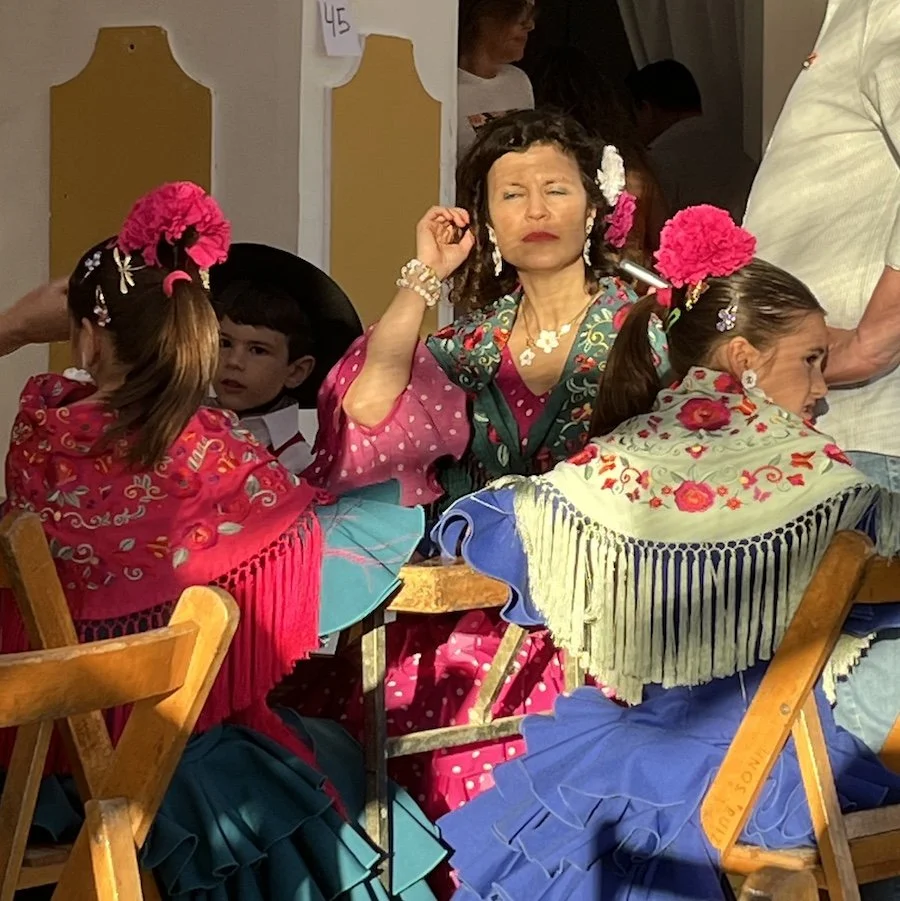
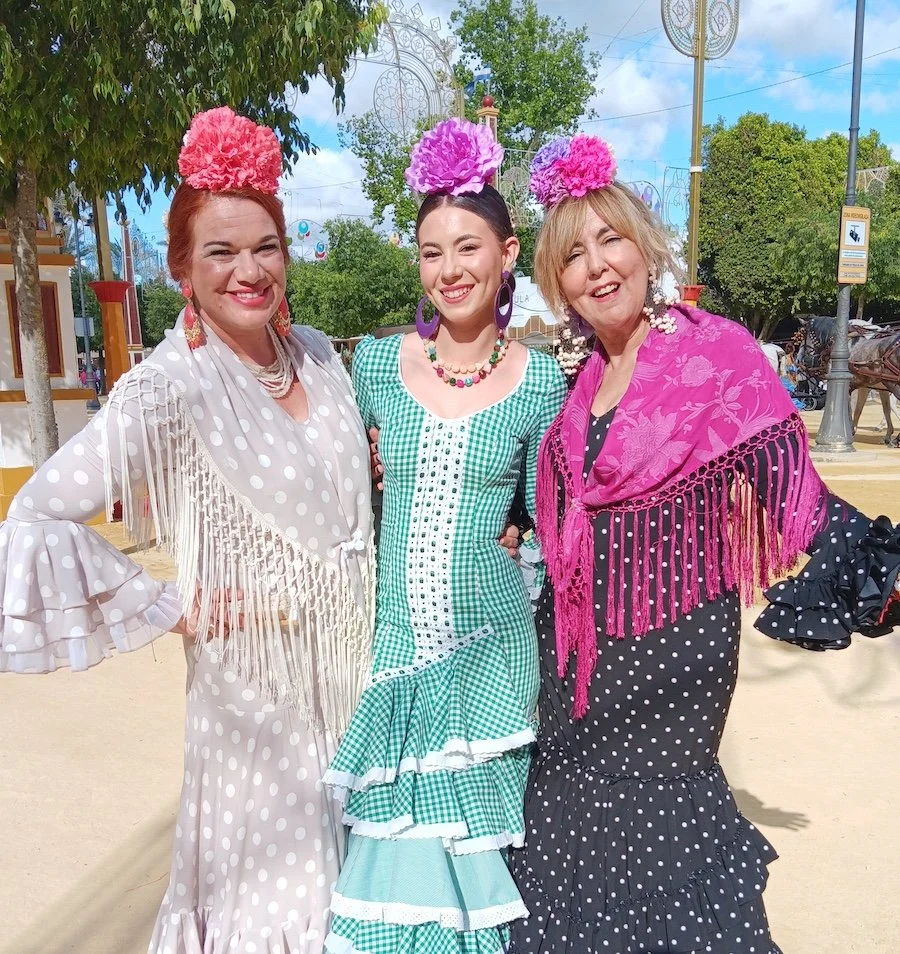
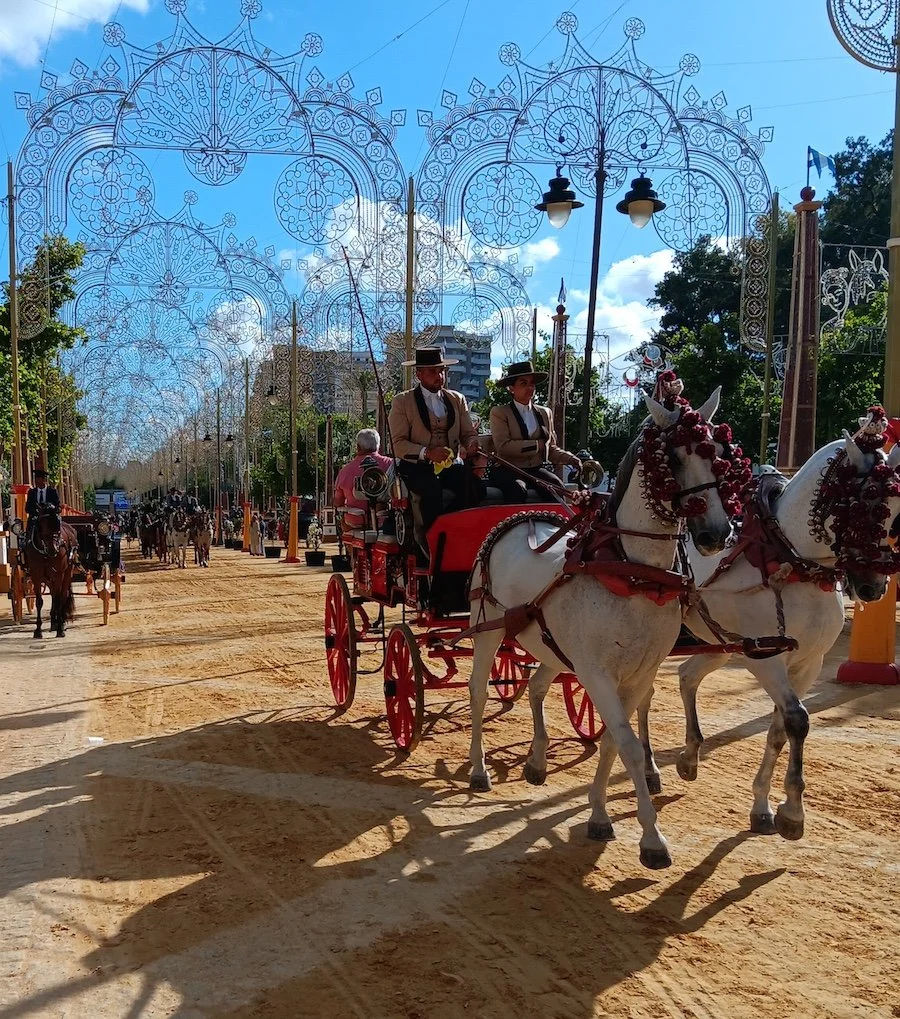
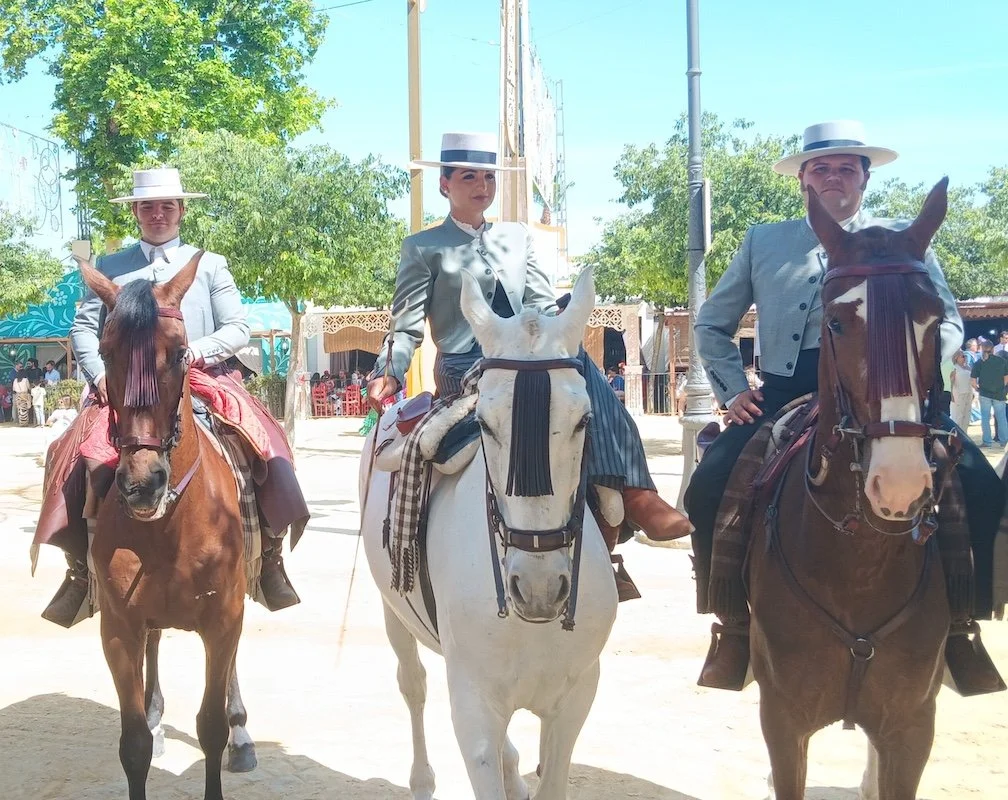
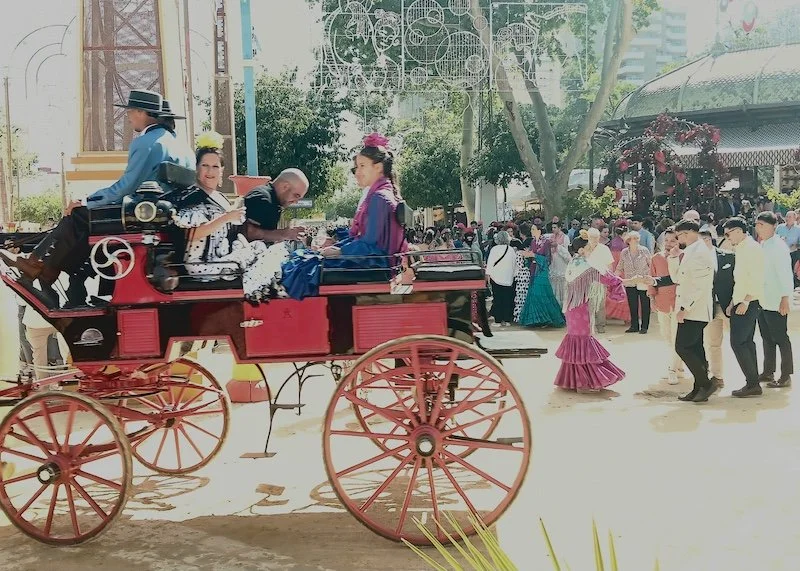
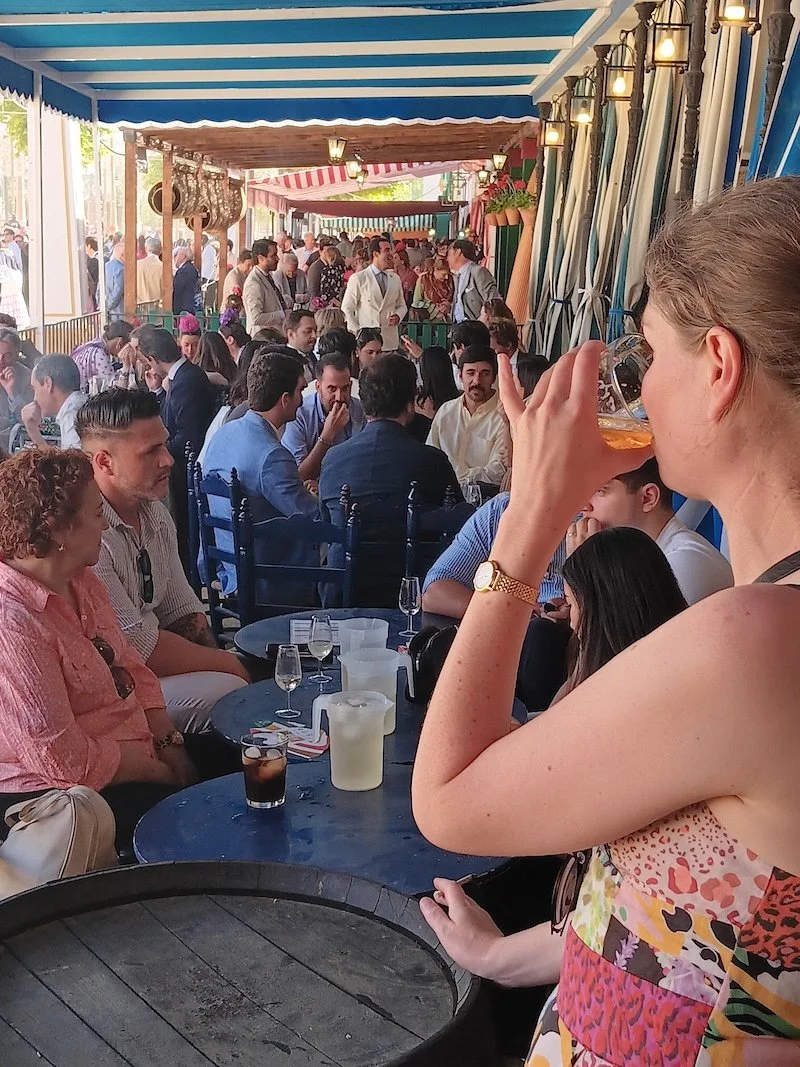
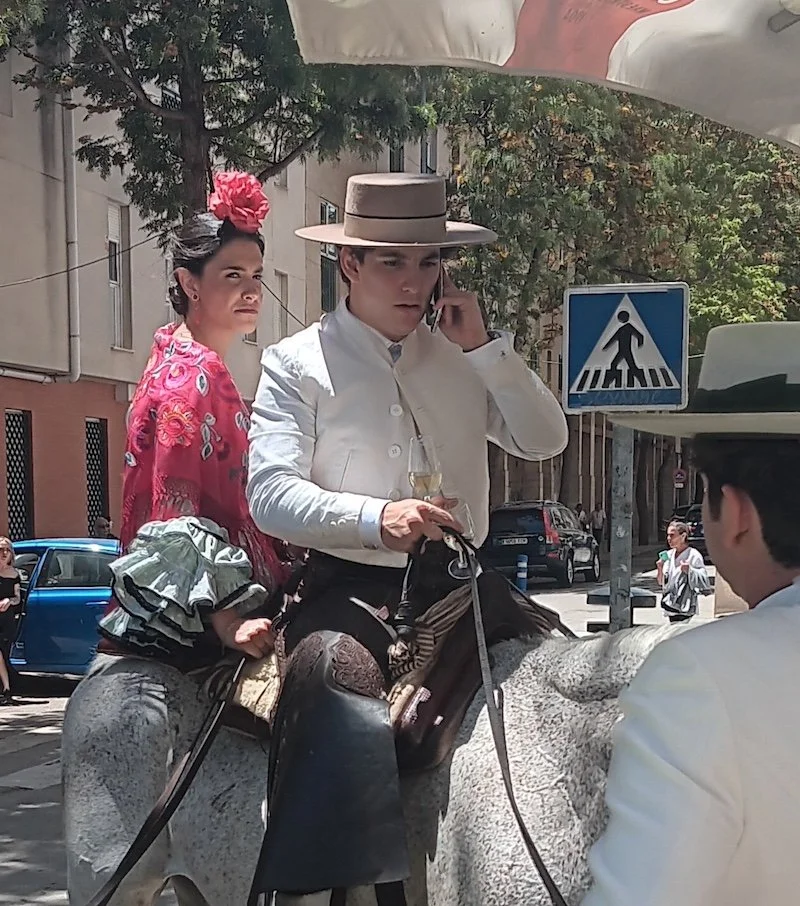
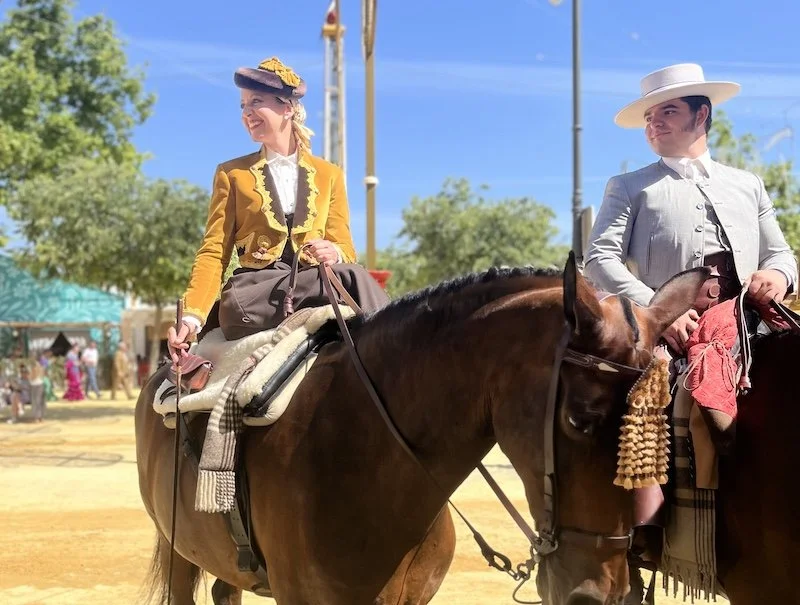
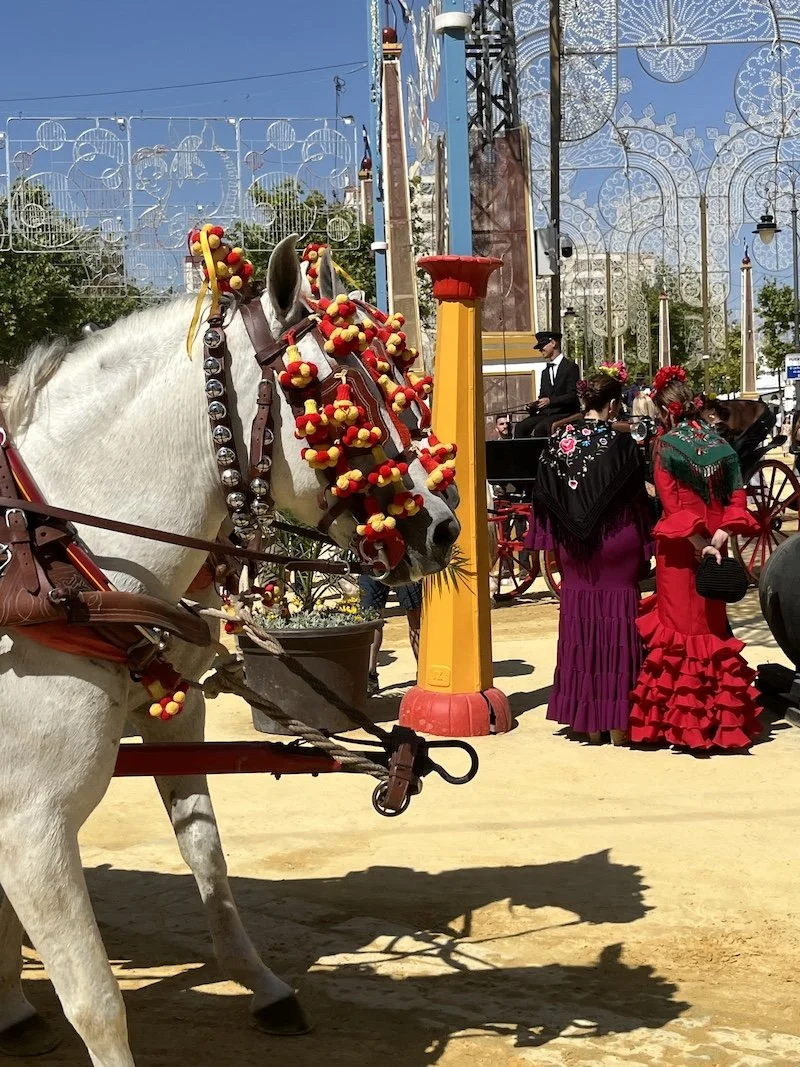
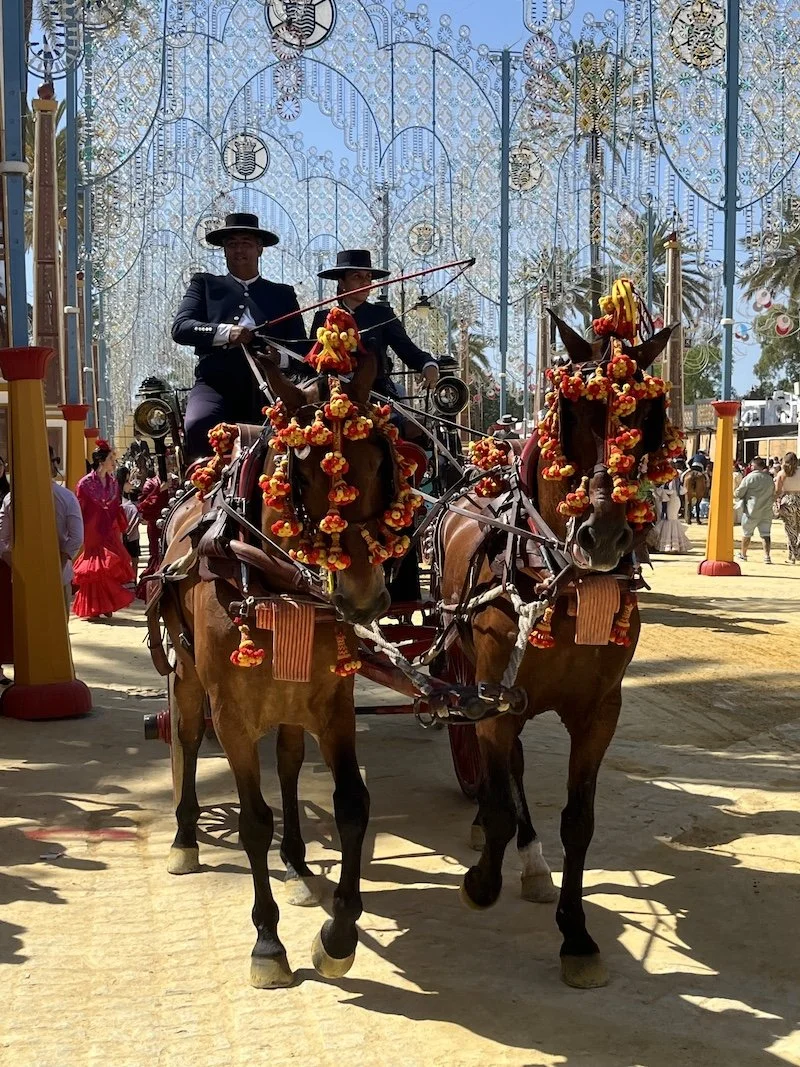
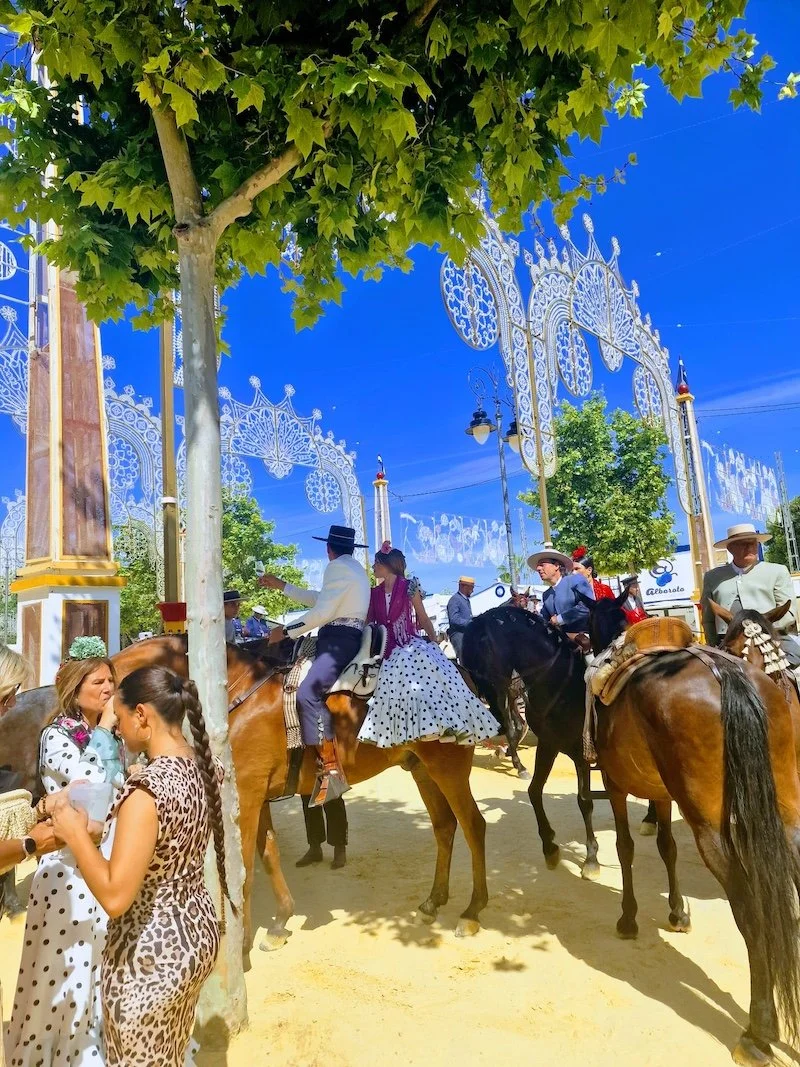
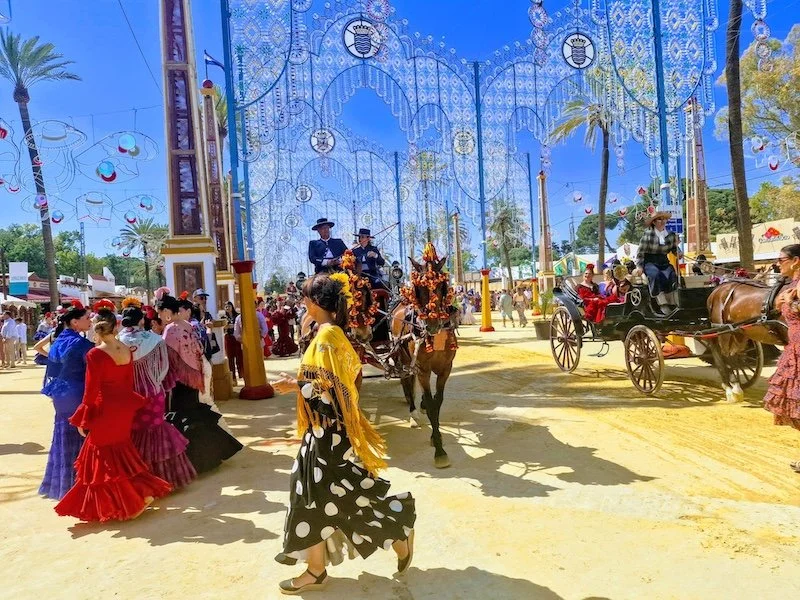
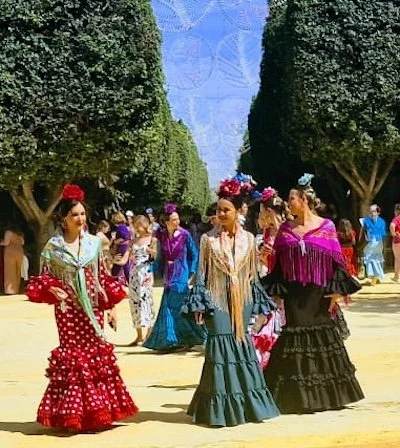
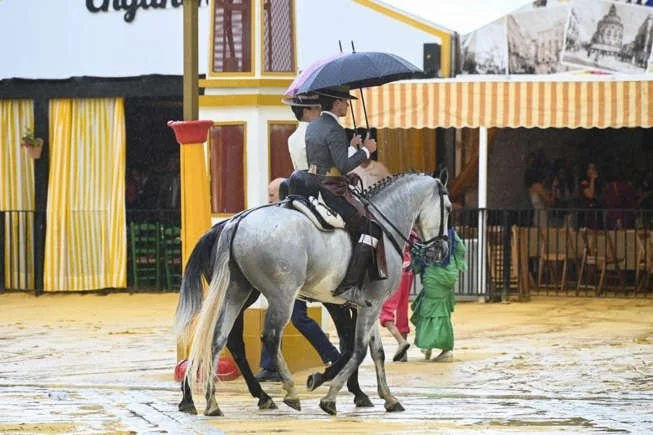
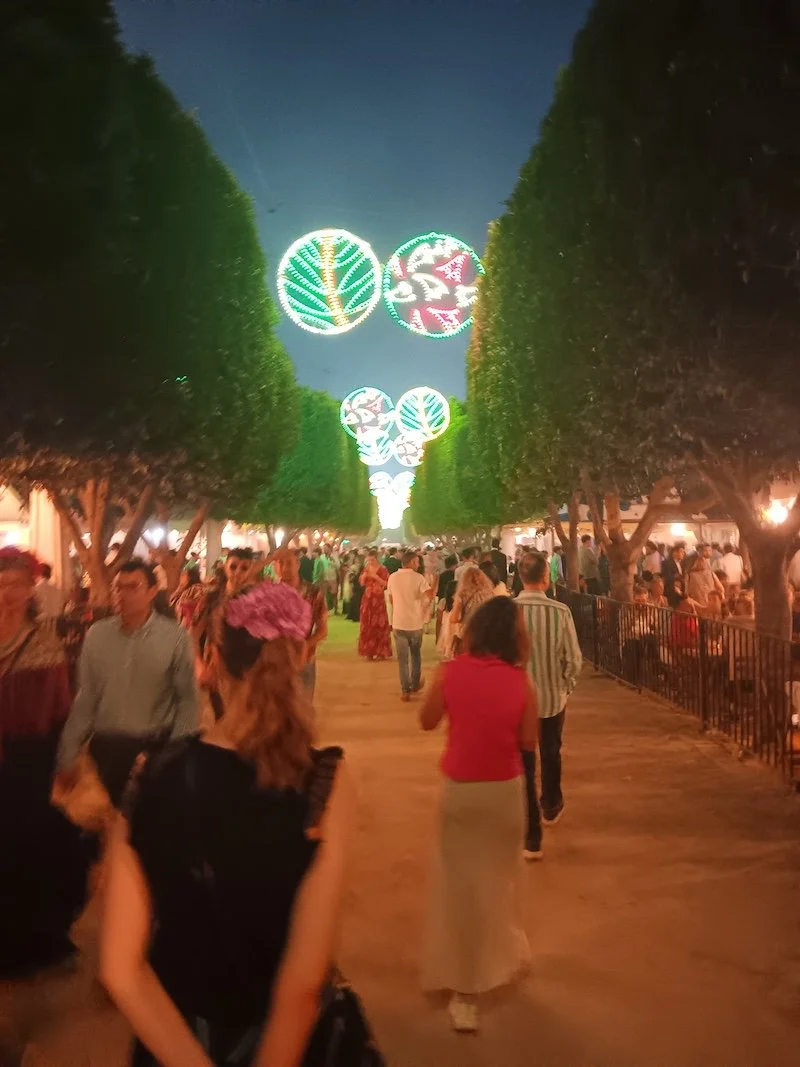
We and our friends were perched at a barrel in one of 180 casetas, drinking beer, when Derek said, this is better than watching TV. Words will never do justice to the sight of thousands of people dressed in traditional flamenco and riding attire, and hundreds of horses under controlled rein, wandering about a park the size of a small neighbourhood, kicking up the famous yellow dust and generally being proudly Jerezano. Still, I tried anyway – you can read my blog post from last year here.
Did you read it yet? Hmmm. Well, I’ll just recount one of my favourite moments from last year’s Feria. Two women in full caballera attire atop identical greys halted side by side facing a crowded tent. In perfect unison horse and rider performed a clockwise three-sixty pirouette, then doffed their hats while the horses did a bow. A barman from within trotted up and gave each lady a glass of fino, which they accepted gratefully and rode off. I suspected that they wouldn’t have to pay for a drink all evening.
Outside of Holy Week, Feria is Jerez’s biggest annual event. It runs for a full week. It’s a chance for the city to showcase its equestrian history, with the superb Andalusian horses centre stage, but with people from far and wide getting into the flamenco spirit.
Space is at a premium in the evenings, so if you just fancy a quiet peek come in the afternoon.
Nah, bugger it. Get stuck in. You can spend hours here just marvelling at the spectacle and party until dawn (the last bus back to town departs at 5 am).
Zambomba (November to Christmas)
The people’s flamenco.
In the last weekend of November the sound of the city changes, as if its heart rate is increasing. Thousands take up the chant of zambomba, all singing along to songs they’ve grown up with, accompanied by the haunting sound of the zambomba itself, a drum percussed by rubbing a pole up and down the drum skin. It gives a sound akin to the breath of a horse who’s just run up a very steep hill. It’s odd and somehow freakishly powerful. I wrote a post about it a while back here.
People gather in a circle around the performers, and unlike flamenco you’re invited to join in. Nearly everyone in the audience is involved.
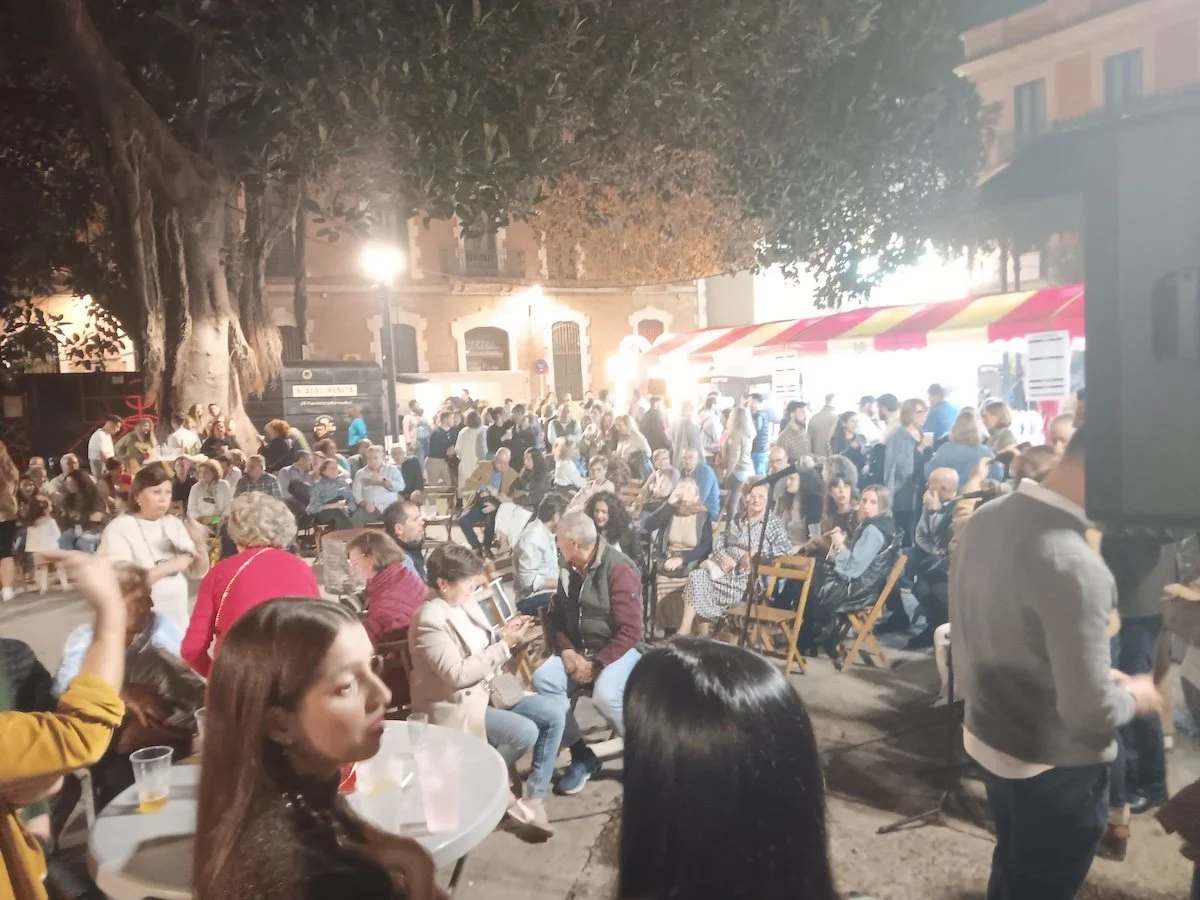
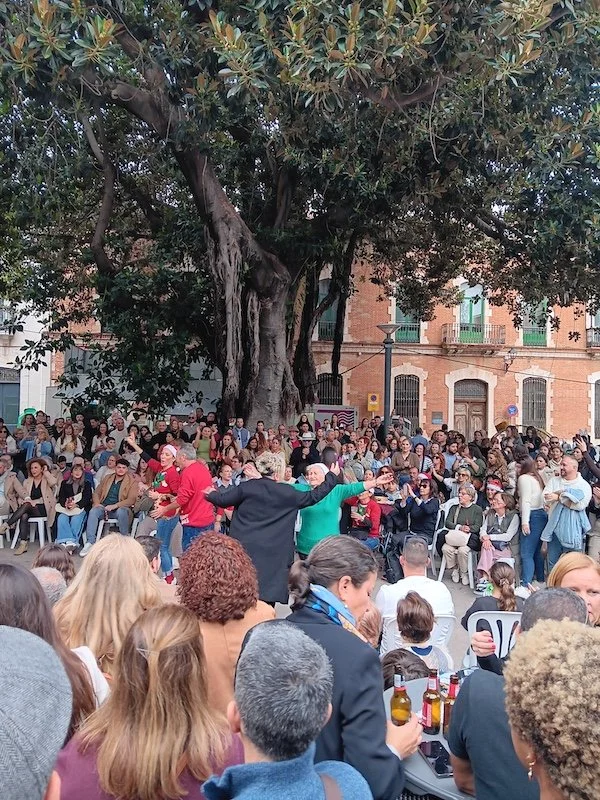
At any one time there might be a dozen or more zambombas going on in the city, from the squares to neighbourhood pubs.
Zambomba runs for five consecutive weekends, with life reverting to relative normal on weekdays. If you ever get the chance to experience a zambomba, grab it with both manos.
Three Kings parade (5 January)
Spanish kids don’t get presents on Christmas day. Instead they must wait till Balthazar, Melchior and Gaspar arrive on their floats on a long slow journey through the city. Minions aboard each float lob handfuls of lollies into the crowd of screaming kids, including Jess, who more than once has beaten some poor seven-year-old to the punch. They pass right by our door so we get a front-row place to stand; this year we even scored a table at the bar outside our building, though we had to cover our macetas to avoid getting lollies in them.
After the parade, sugared-up children go home and patiently await the dawn of the following morning so they can open their presents. Yeah, right. I suspect that this particular trio of sugar-pushing wise men don’t have kids.
Lasting only a single afternoon, the Three Kings parade might well be the briefest celebration of the year.
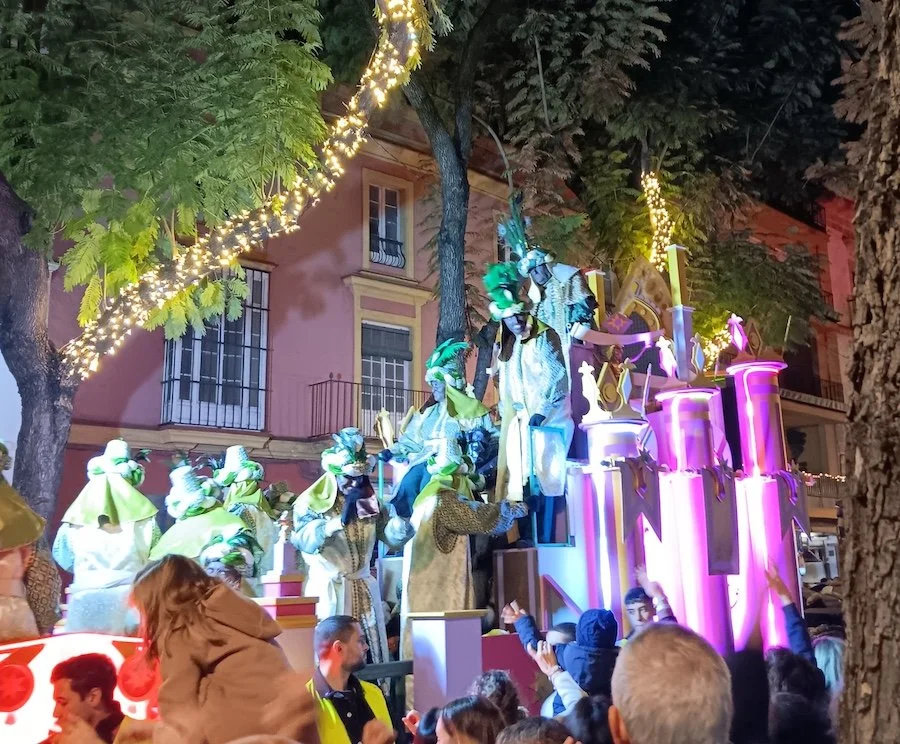
There’s one more element to the Christmas period. In late December the postman comes to town to collect all the kids’ letters to the Three Kings.
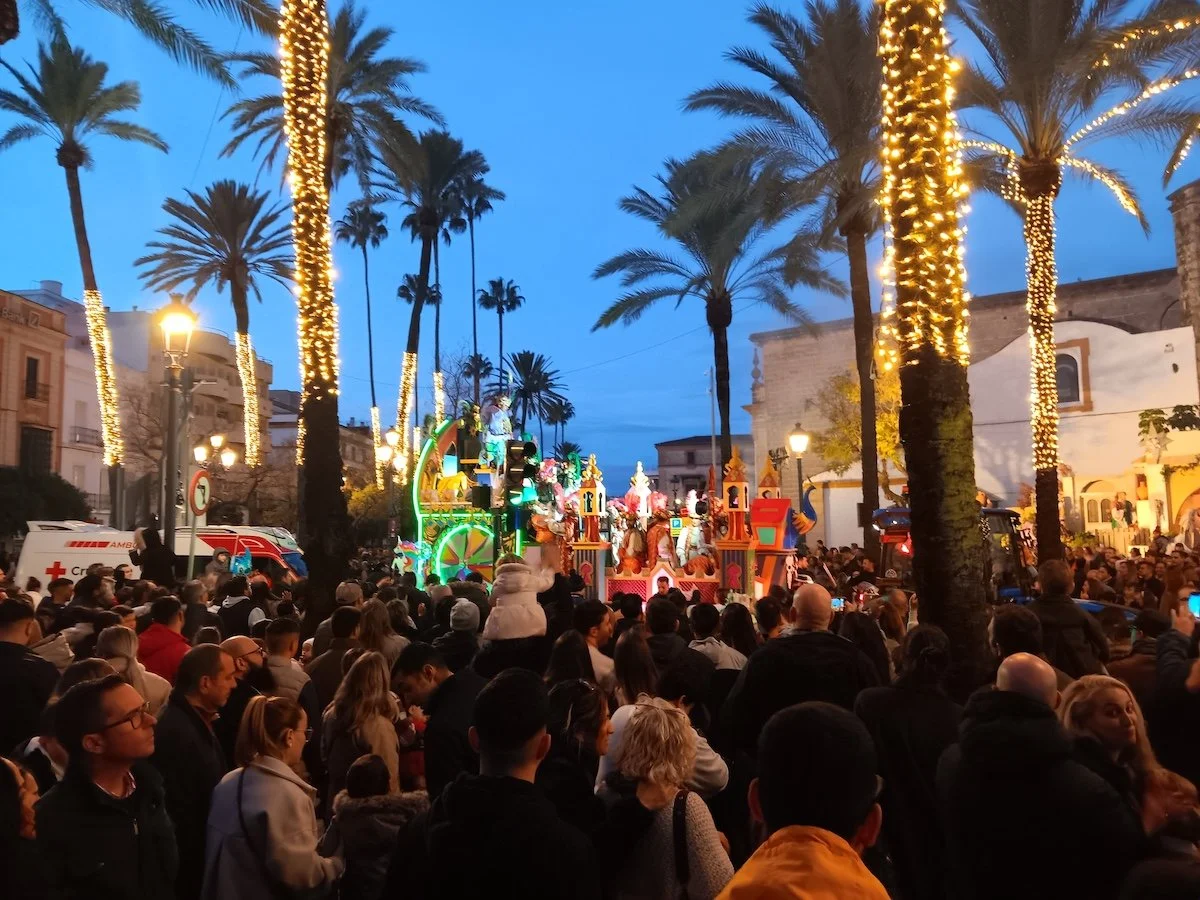
Okay, that’ll do for now – but there are way more events on Jerez’s annual calendar. There’s the flamenco fashion show, Vinoble, grape harvest festival, Tio Pepe festival, Bulería festival, European horse day, book fair, film festival, superbike world championship, world wine tourism week, international flamenco day …
In fact, you’re unlikely to visit Jerez at a time when there’s not something going on. Whatever it is will be colourful, lively and loud. If you don’t want to be caught out, or if you’re surprised by seemingly expensive hotel prices, search for what’s going on in Jerez before you come.
Things to do year round
Flamenco

I blogged about this not long ago, so check out the post here.
There’s one place that has three free shows nearly every day (though it’s polite to at least buy a drink or two while you watch).
You can just rock up. Get there 15 minutes before show time and grab a spot at the bar. If you’re not quite in line of sight of the stage, don’t fret – check out the clever mirror setup above the bar and watch the show in reverse.
Our other favourite place is Tabanco Cruz Vieja (‘Old Cross’). It’s only open on weekends, and not all year round – follow them on social media for the program, released weekly when they’re operating. Cruz Vieja is effectively free; you pay €10 each but that comes off your food/drink bill later. It’s easy to book by WhatsApp message (Mesa para 2 personas, a las 9.15 por favor, plus your name and phone number); you need to be there by 9.15, give or take, to confirm your seat for the 10 pm show. So, there’s €10 spent already. The show is spine chilling and the food is great.
If you’re really serious about seeing local flamenco, look out for what’s on at Flamenkana, the African/Spanish restaurant. They have occasional shows too but only every month or so. The show is free when you dine there. You can reserve through Google Maps, but if you’ve found there’s a show scheduled it pays to message through WhatsApp, as to see it you need to be seated inside, not out on the terrace.
Dancing horse show
I’ve owned a horse, I’ve reluctantly and inexpertly ridden a horse and have the broken coccyx to prove it. I don’t love horses. But I’ve been to this show twice because there’s a steel fence between me and them.
The history of equestrian in Jerez is unmatched, even by the Viennese. You can watch a 90-minute show of the horses ‘dancing’, admirably controlled by the finest horse men and women in the world. The show is about €25 per adult; for a little more you can also do a tour of the museum.
You can buy tickets online here. If you want to see only the show, click on Espectáculo “como bailan los caballos Andaluces”. By the way, for some reason neighbouring seats are numbered oddly, like 97, 99, 101, so don’t think you won’t be sitting together. It doesn’t really matter where you sit, either – there’s a good view from everywhere.
Tip: if you have a printed ticket, or it’s on your phone, bypass the crowd outside the main gate and proceed to the first little checkpoint within – most people queuing outside are waiting to buy their tickets from the on-site ticket office.
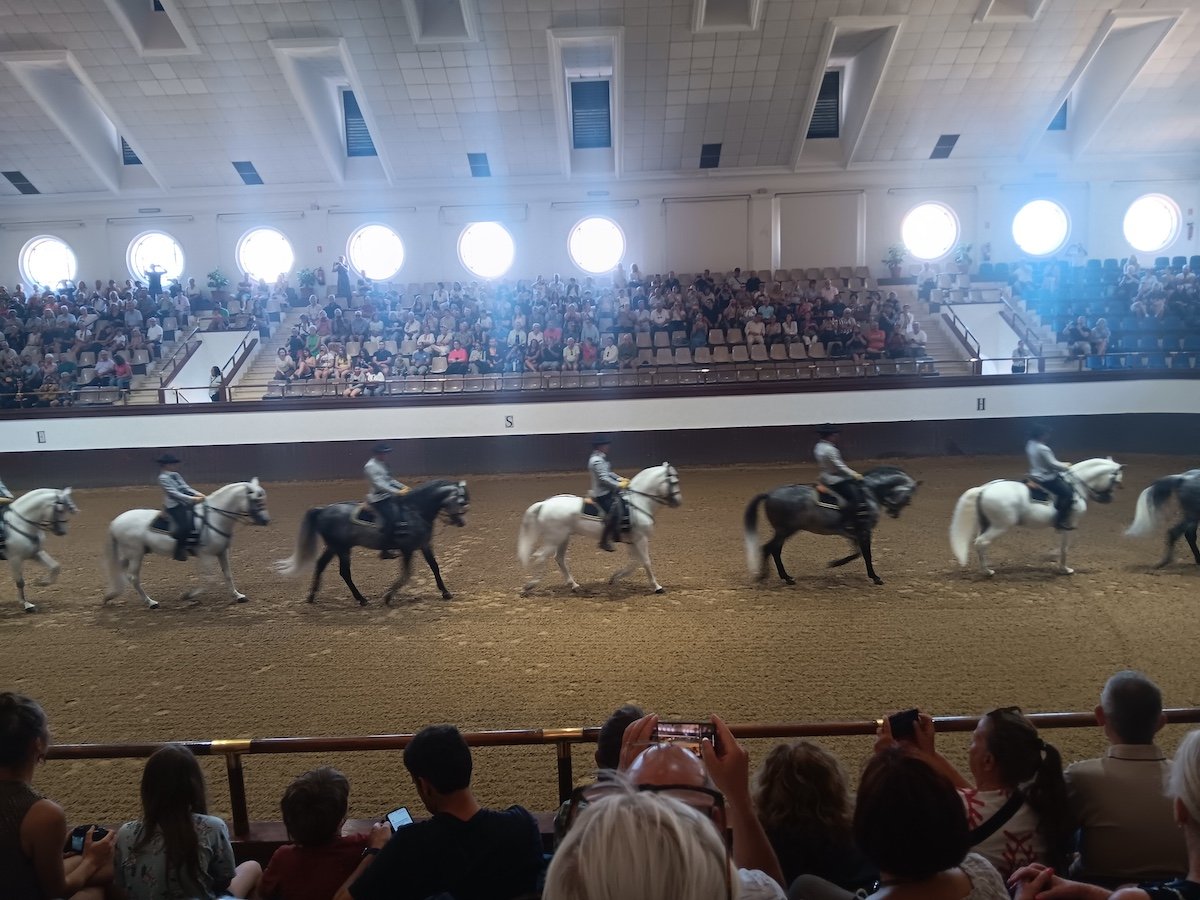
Did I mention I was a crap photographer? In any case, recently the school has banned the taking of photos so this might be all you get.
Visit the Alcázar
While not as fancy as the Game-of-Thrones-famous Alcázar of Seville (it’s where the scenes from Dorne were shot), the Alcázar de Jerez offers a fascinating look back into the Moorish history of the city. Climb the fortified walls and tower, and check out the herb garden, but don’t miss the art on display and the old apothecary shop inside the main building.
The Alcázar also boasts a ‘camera obscura’, a system of lenses and mirrors built into a tower that projects a 360-degree view of the city onto a screen. Or so I’m told. It doesn’t seem to be open very often, presumably because it relies on a volunteer to be available to take you up there. Let me know if you manage a visit and you can help me explain it better on this page.
Adults €5, kids and over-60s €1.80* (plus another few euros if you can snag a tour of the camera obscura). You can book online here but just rocking up to the entrance is usually fine (all bets are off if it’s a busy festival weekend). It’s usually open from 8.30 am to 2.00 pm … but check your Google Maps for updated times.
* Not that we’d ever do such a thing, but there was one time we needed some rosemary for dinner – and it occurred to me that paying €1.80 to go to the Alcázar and swipe some from the garden would be cheaper than going to the supermarket. I just kept getting premonitions of footage on the local TV news of me, handcuffed, being loaded into a police car. Quite an embarrassing way to be kicked out of Spain.
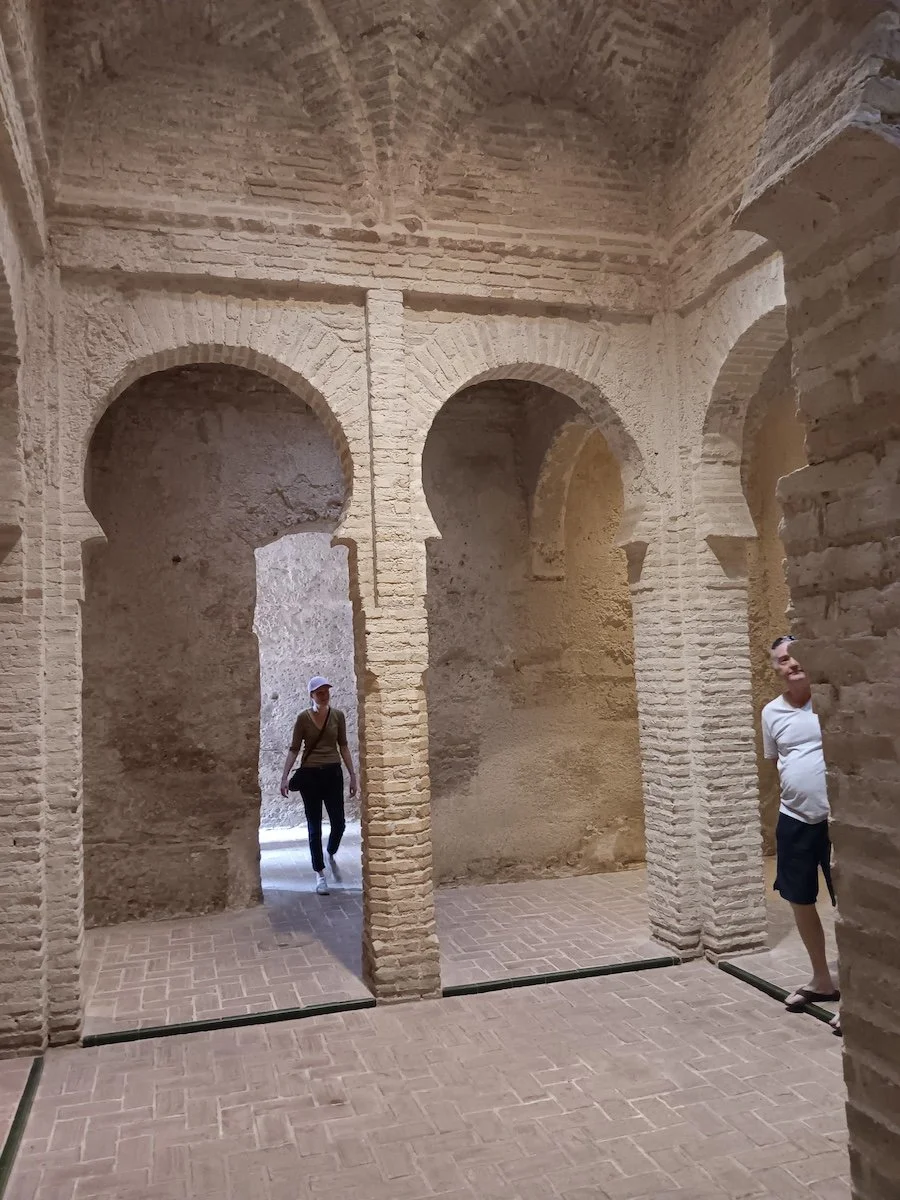
The Alcázar
Check out the cathedral
Which cathedral? There are dozens around the city, many of which you’ll discover accidentally as you wander around. But when people talk about ‘the cathedral’ they’re usually referring to this one.
As a non-cathedrally person, I’m not usually interested in churches, but I got a real kick out of the Catedral de Jerez de la Frontera / Colegiata de Nuestro Señor San Salvador (its full name), inside and out. Indeed it’s spectacular and costs only a few euros to see. At the back of the main chamber is an entryway to more and more of the building. It’s easy to miss so search carefully.
We were told to keep an eye out for the flying buttresses, but there was no advice on what to do if one came at you.
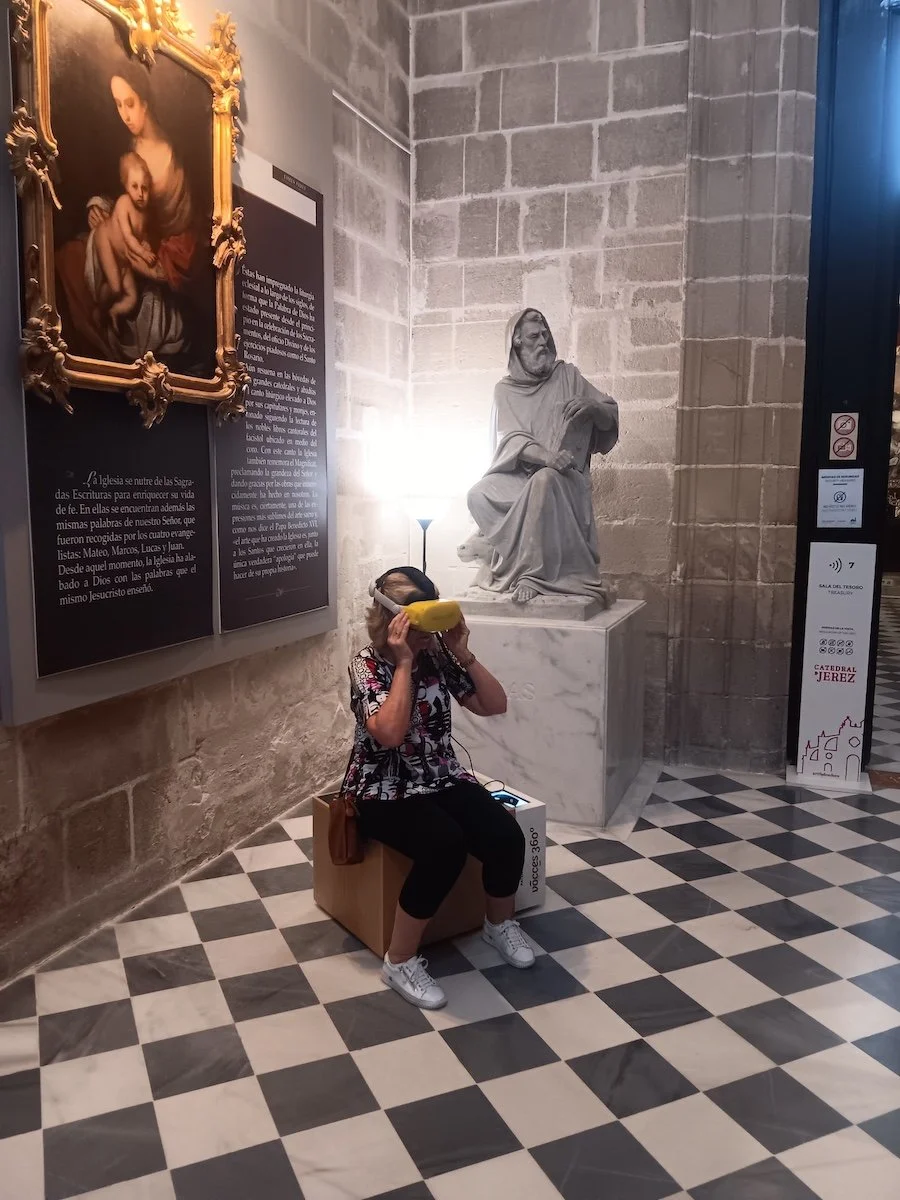
Jess’s mum Alice experiencing the lazy-person’s tour of the cathedral.
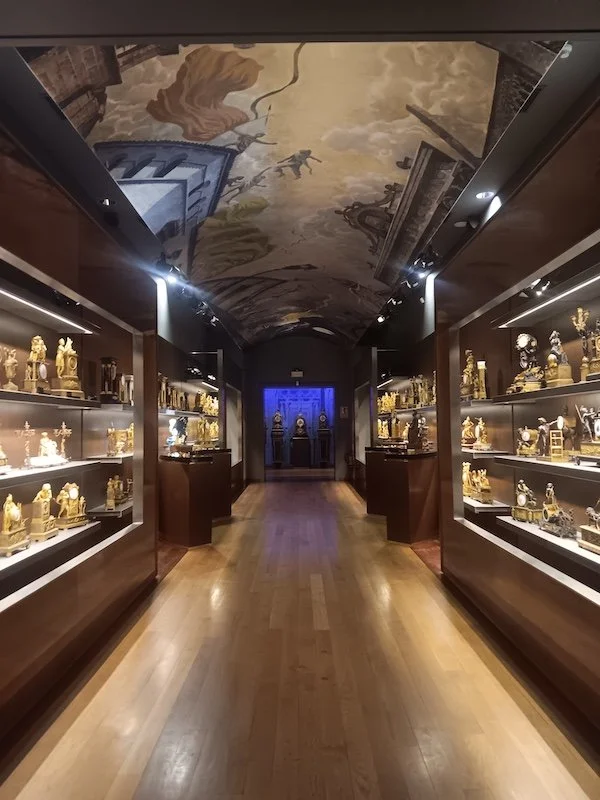
Museum of time
In beautiful grounds is this wonderful building filled with European clocks from the 18th and 19th centuries. These are stunning mechanical wonders, each more intricate than the next, depending on which way you’re walking. Pro tip: be there on the turn of the hour, preferably 11 am or noon, to get the full experience – 500 old clocks chiming out the hour is quite a hoot.
Admission is €6 for an adult.

Visit a sherry bodega
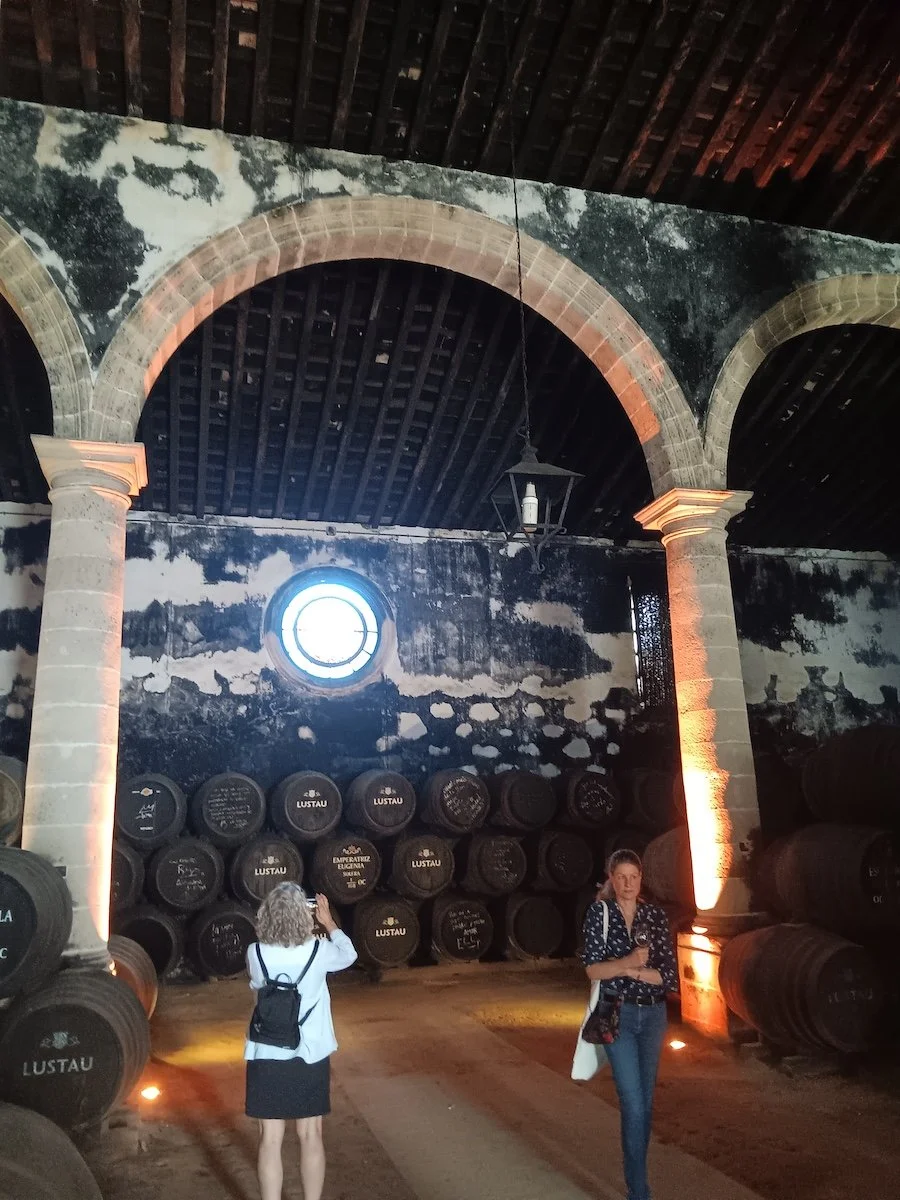
We’d been in Jerez for 18 months before we did an organised sherry tour, as usually we just like to visit the various bars and sample what they’re offering and we’re not that interested in viticulture. But when we finally did a tour – with Jess’s parents in tow – we were quite glad we’d made the effort. Even citysiders will appreciate the ‘trick’ that is the soil beneath the so-called sherry triangle which gives sherry its unique characteristics.
We researched a couple of options that would take us away from the bigger mobs and settled on Lustau, 10 minutes walk to the west of the town centre. You can book online and select the English version. The tour with five wines included (you sip them in sequence during the walk among the barrels) costs €26 and takes an hour; for seven wines it’s €36 and takes another 15 minutes.
The winery itself is beautiful, the host informative, the gift shop affordable. And Lustau is right across the road from one of our new favourite restaurants, Raíces, so if you visit near lunch time then your next stop is a no-brainer. Raíces is a nice place to hang out, particularly after you’ve had five sherries and a surprise vermouth.
Another bodega slightly off the tourist radar is Álvaro Domecq, which comes recommended by a reader. It too can be booked online and currently costs only €22 for a one-hour tour.
Go for a walk
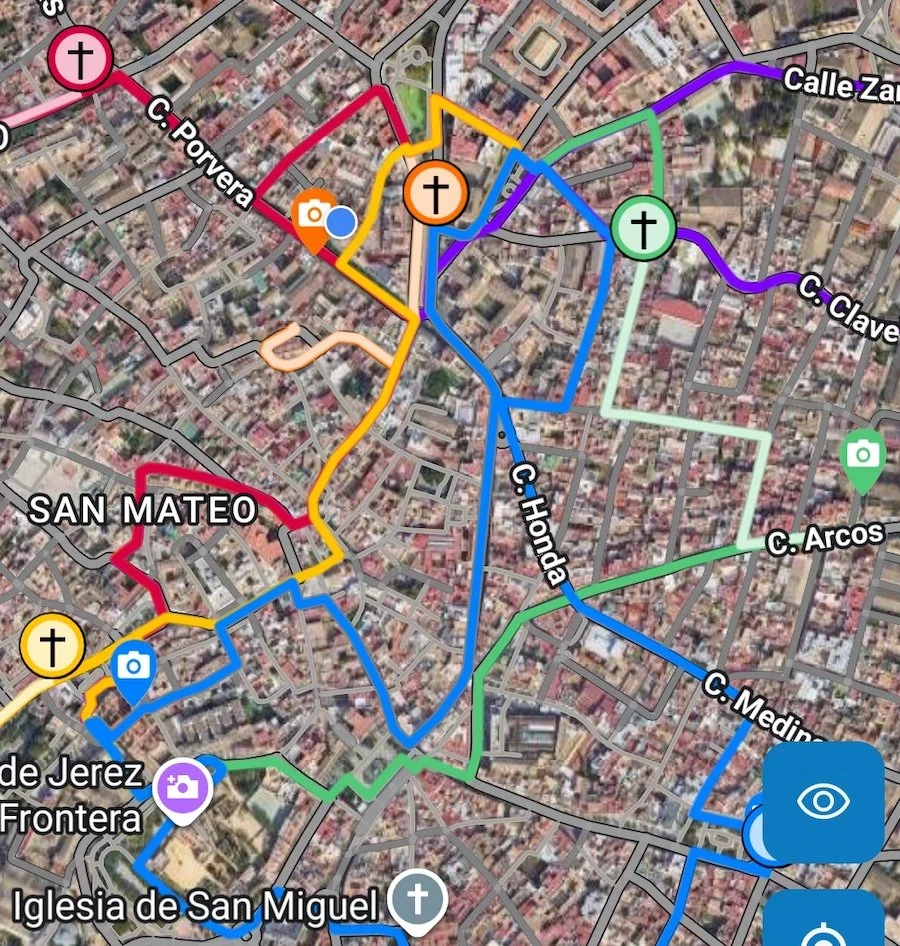
Strolling around the neighbourhood streets of Jerez is a tremendous way to get a feel for the town, particularly if you step away from the busy centre. This map is a copy of one I or made for another page but it belongs here too. The green blobs represent my favourite areas for a constitutional; the red icons are our favourite bars. I get a real kick out of how many of the streets feature a gentle curve, so you’re continually discovering what’s around the next corner.
Taxis
Uber doesn’t operate in these parts. Locals rely on taxis. Luckily the local company – Pide Taxi – has an online booking system, which is great if you’re not brave enough to tackle the Spanish-speaking phone service.
First of all, there are two taxi ranks where you won’t have to wait long for a cab, if at all.
But it’s easy to book online. The site you need is pidetaxi.es. There’s an app too, but unless you live in Spain it might not be available on your Google/App store.
To save you a few minutes, set up an account before you come to Spain. You don’t need to enter any payment details – you can pay by card or cash at the end of your trip.
At the top of the webpage is the option to display the text in English; in any case, the button to look for is Pide un taxi ahora/Order a taxi now. You’ll then find options for pickup time – now or in the future.
Use the map to locate your pickup and dropoff points, number of passengers, number of suitcases, whether you have a pet etc.
I don’t know if this applies if you have a non-Spanish phone number, but five minutes before your pickup time you’ll receive an automated phone call. It’s just telling you the licence number of your driver and to confirm he/she is nearby.
You’ll also get a ping/popup on the app or web page with the model of vehicle and its registration number – make sure you’re getting into the correct taxi, particularly if you’ve booked pickup from a busy location, lest you find yourself at the zoo instead of the airport.
I’ve not yet had a no-show or even had a cab turn up late.
In the event you’ve hailed a taxi at a rank or on the street, and if your Spanish is bad, it pays to have an address written down or a pin dropped at your destination to show the driver.
If you’re paying by cash it’s common and greatly appreciated to round up to the next euro value (or two).
Department stores
There are a thousand-thousand tiny shops selling everything from wooden spoons to flamenco dresses, religious icons and soccer balls. If you’re looking for a new T-shirt, a pair of shorts or a scarf, perhaps your best option is Sfera on Calle Larga. For some reason they don’t sell undies and socks, though (this remains one of the city’s biggest mysteries). Sfera is open all day every day except Sundays and public holidays.
If you want to do some serious shopping, on the outskirts of the city are two huge commercial parks. To the west is Area Sur: Centro Comercial Área Sur. It has dozens of department stores, an Alcampo hypermarket, IKEA, electronics and houseware, indoor and outdoor restaurants and – crucially – an indoor go-kart track. To the north is an equally gargantuan centre, though it doesn’t have the cute outdoor cafe strip (but it does still have plenty of eateries inside). There’s a Hipercor hypermarket, electronics, household stuff, clothes, and just about everything else you won’t need but will probably buy anyway: Hipercor El Corte Ingles
Each of these commercial behemoths is 30 or 40 minutes’ walk from the centre of Jerez, or a €5 taxi ride. Closed Sundays.
Supermarkets
Here are map coordinates of four supermarkets in Jerez. If you have the choice, visit the supermarket at siesta time, between 3.30 pm and 6 pm, and you won’t have to battle the crowds. Supermarkets are closed on Sundays and public holidays. There are a few minimarkets around who might be open on a Sunday though, for staples like bread, milk, whisky and Red Bull.
Mercadona. This is our local and favourite, as it’s built inside an old sherry bodega and therefore has lots of space. A good spot to pick up a pack of jamón for your hotel room.
Carrefour Market. This place is usually packed, even on occasion at siesta time, because it’s right in the centre of town. You can queue for some time at checkout. If you have the legs for it, choose one of the other supermarkets – but really this place has everything you need.
Supermercados Dia. This market is really quiet in the afternoons, which is why I like it so much.
Supermercados El Jamón. I haven’t set foot in here yet but I walk past often and it looks like my kinda place, i.e. not busy most of the time.
Tip: If you want to handle the fruit/veggies before you buy, put on one of the disposable gloves.
Fresh food markets
When you visit these little places, don’t pick up the produce. Point to what you want and the server will pack it for you.
Mercado Central de Abastos. Jerez’s central indoor/outdoor market and meetingplace since 1873. Terrific seasonal fruit and vegetables, meat, cheeses, fish, olives, charcuterie, socks and undies. It’s well worth a visit even if you’re not looking to buy. The larger stalls have a ticket machine for the queue so there’s no need to fight locals for attention.
Frutería Sol. A great small shop with excellent produce. You’ll likely be stuck behind someone who’s on the phone to their mother, confirming what kind of tomatoes she wants.
Fruteria Sara. A tiny store, but everything they have is great quality.
Takeaways and bakeries
When you’re travelling it’s easy to get a little restauranted out. Here are some conventional takeaway joints for when you’re looking for something easy on maybe not so Spanish. (By the way, lots of tapas bars will offer food to go, but these guys are properly geared up for it.)
Pizzería La Roma Centro. Thin-style bases with really good quality ingredients. You can order online, arrange delivery or pick it up yourself.
Turco Kebab Porvera 49 Jerez. Really delicious large kebabs for about €5 each. Order in store and wait a few minutes.
La Rosa de Oro - Pasteleria & Confiteria (Rose of Gold). Excellent French-style cakes and pastries.
Pastelería Jesús. Another bakery, tucked away in a quiet neighbourhood. Cakes and pastries every bit as good as Rosa de Oro’s but with the added bonus of a box of shortbread biscuits to keep in your room or as an awesome gift.
Where to stay
I have only one recommendation for you, because for obvious reasons we don’t have much call for hotels. When we were doing our reccy a couple of years ago we stayed at Tandem Solera, in Centro, and because we liked it so much we also recommended it to most of our visitors, who also liked it. So, we’ve curtailed our research somewhat. Still, Tandem Solera is quiet, clean, the beds are big and comfortable, and it’s in a fantastic location. The rooms have a kitchenette – including a toaster. Occasionally there’s someone at the front desk but nine times out of 10 you’ll let yourself into the building and your room with a code.
My only tip concerns your taxi ride. The street the hotel sits in is narrow and it’s not the easiest place for a taxi to pull over, so for both dropoff and pickup use the location of the well-known Teatro Villamarta. It’s about 30 metres from the hotel’s front door and the driver won’t have a problem pulling over.
And that’s literally everything to do in Jerez. Not. I’m ignoring possibly the most fascinating aspect of the city (and Spanish towns in general), which is people watching. Coming from Australia as we do (or the UK or USA as we don’t but in many senses might as well) we have become used to a culture of suburban sprawl, mega-chain eateries with correlated prices, industrialised streetscapes with expensive parking, and a general decline in social cohesion accompanied by the sound of smashing beer bottles at night.
Jerez typifies a liveable city – you know, the type of walkable township that local governments in our countries tell us they aspire to but somehow never deliver, having wandered too far from that particular track after years of reliance on driving. The streets here are packed with people, not cars. The people comprise all ages, with upwards of three generations likely to be occupying the same bar at any one time (midnight included). Even the 20-year-olds here are well behaved, presumably because grandma is likely to rock up there at any moment.
The tapas culture means that you can afford to eat out, not having to cough up an hour’s pay for a schnitzel and chips. You can get a small glass of beer or a sherry for €1.50 or €2. A bus to the outskirts costs €1.10. Four of us one morning at the bar outside our building had a coffee and a generous tomato sandwich each and the bill came to €10.50.
To top it off, quite literally everywhere you walk around the centre of Jerez is beautiful. The architecture, the plazas, the streetscapes, the yellow lighting, the blue sky, the palm trees … there’s not a single corner that’s given to function over form.
I do hope they let us stay.
