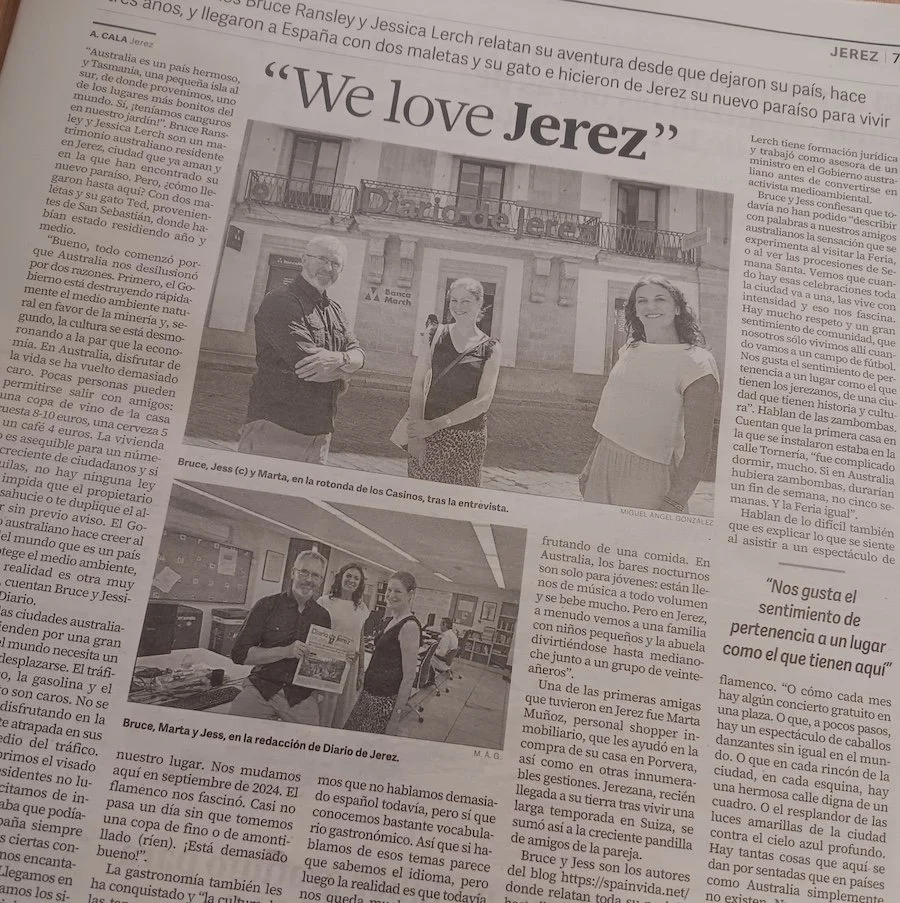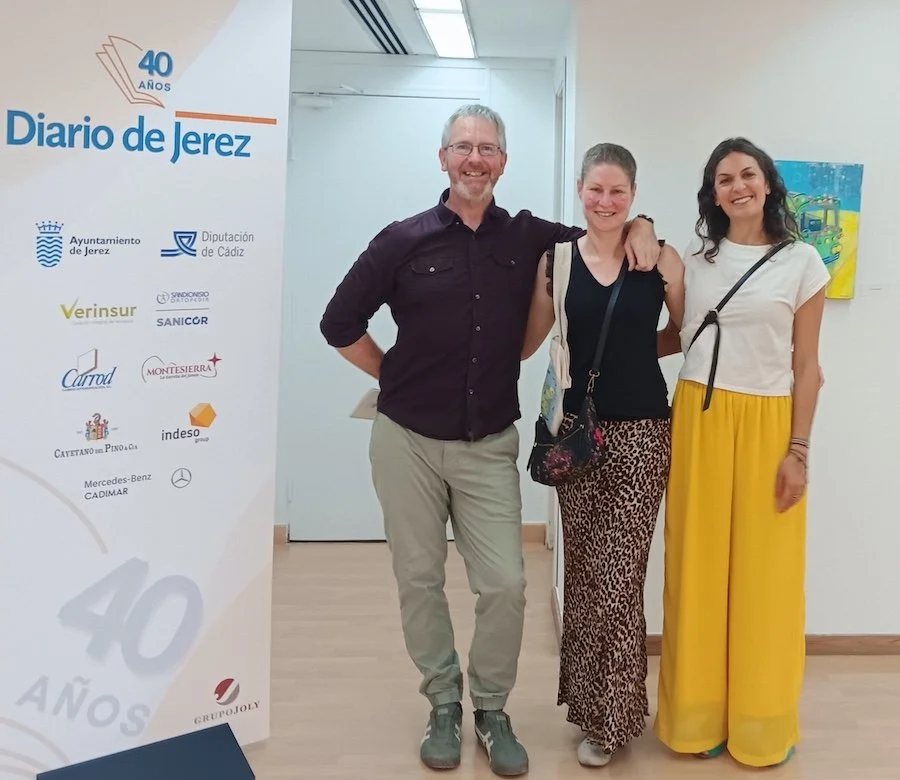
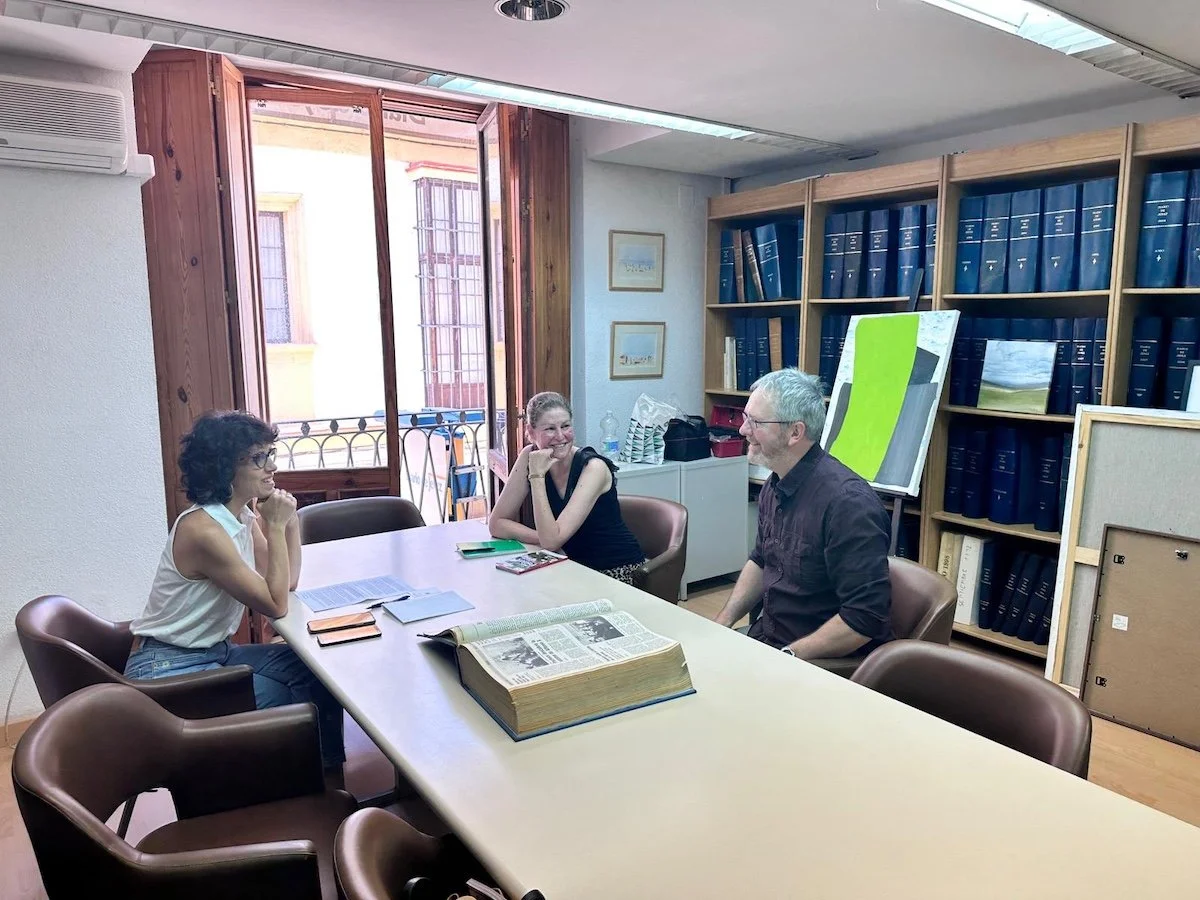
Jess, Marta and me (left) during a tour of the local Jerez newspaper offices
This photo was taken by Arantxa, our new Jerezana friend and a journalist at the local paper. She had cautiously agreed to meet with us after an indirect introduction through a colleague of hers who happened to be an old friend of Marta’s (our mate who runs Home Hunter Jerez). I say ‘cautiously’ because, having been lumped with the job of tour guide owing to her ability to speak English, she surely must have been wondering why the hell these weird Australians would want to see her office.
It was my idea. I worked in media in Australia for a time and have watched with annoyance the decline of local reporting at the hand of the big banner publications. But in Diario de Jerez we have genuine local journalism as it used to be in Australia. On any given day you’re likely to see a story on a national election result next to a piece on a resident’s concern over the growing number of potholes in her street. In fact there’s a team of 10 or so reporters and photographers – plus support staff – working on daily editions of their print newspaper, with a digital version on top, collecting stories about the community for the community.
Diario de Jerez has its origins in a publication launched way back in 1867 by a Cádiz local, publisher Federico Joly Velasco. It wasn’t until four generations of the Joly family later that they began expanding their newspaper empire, with the Jerez edition launched in 1984. It was followed by a further eight local publications serving the wider region of Andalucía, and these days the various iterations of Diaro are the backbone of local media here.
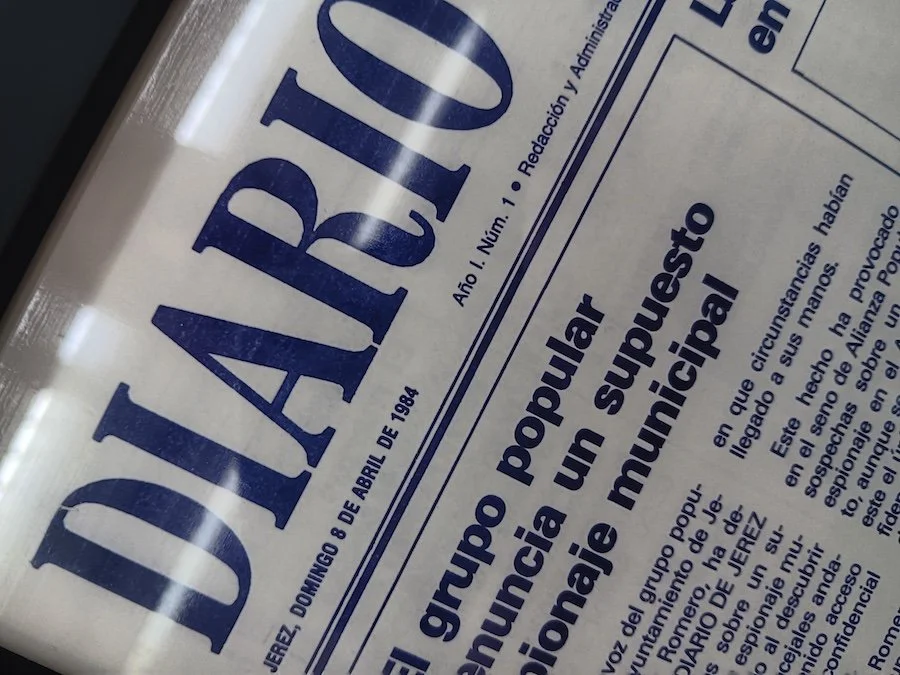
Year 1, number 1 edition of Diario de Jerez
For her part, Arantxa first set foot in the door of Diario de Jerez in 1998 as an intern, landing a full-time gig in 2004 after a varied few years in government comms. A local and veteran of all things Jerez, she has watched the city change rapidly over the past couple of decades. In summer, she says, there used to be no tourists. Even the restaurants were closed. Everyone went to the beach.
She had sat us down in the impressive boardroom of the Diario office, which itself occupies a grand old building in the heart of the city.
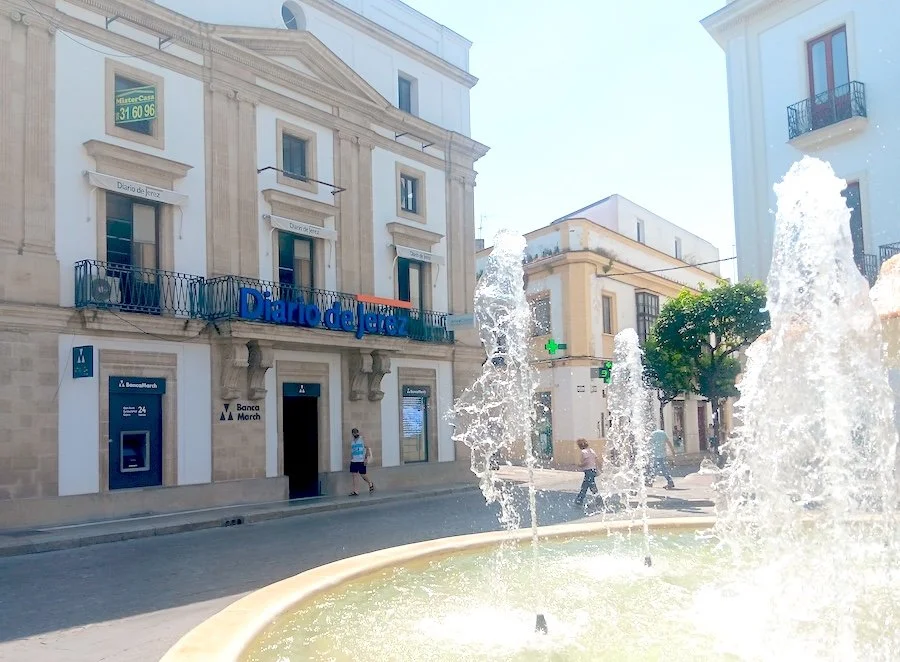
It was a terrific conversation; Arantxa’s English is great – far better that our Spanish – but occasionally Marta had to step in as Arantxa became lost in our clumsy Australianisms (on a positive note, she now knows how to say G’day). Naturally, she was curious about why we’d moved to Jerez and we tried our best to explain. It only occurred to me later that you need only read this blog to find the answers.
But Australia is such a beautiful place, she says. Why would you leave? We explained how the government is tearing apart the environment, described the loss of real industry in exchange for mining and forestry, also that Australia has lost any semblance of culture because no one can afford to go out any more …
Still, koalas are cute. The ones that are left, anyway.
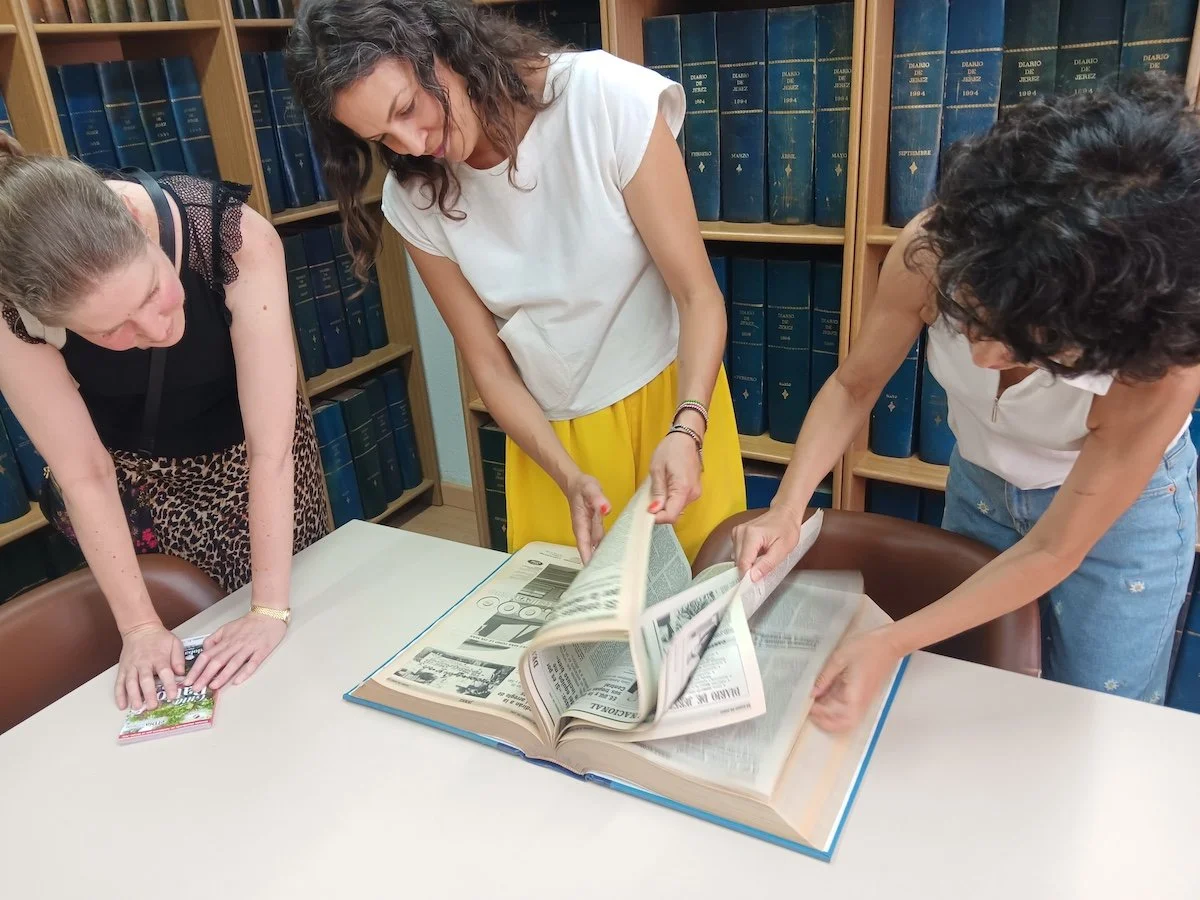
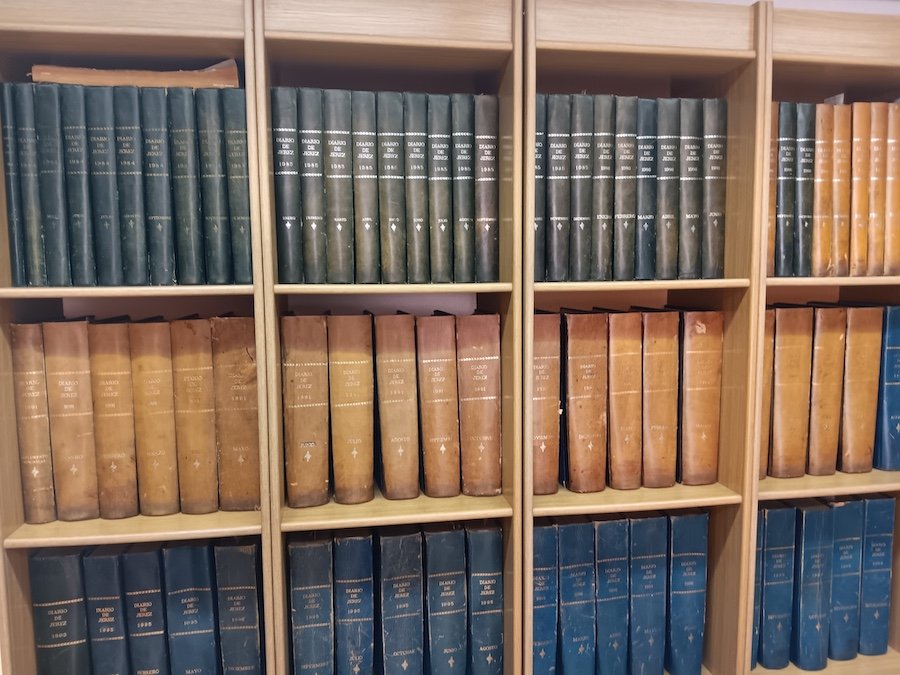
I loved the library of every edition of the paper since 1984. The room has that delightful smell of a second-hand book shop, or like … well, like old newspapers. As for the newsroom, it’s bustling with journos busily compiling their next story. Old-style TVs on the wall, framed editions of the front page, there’s even a sports desk.
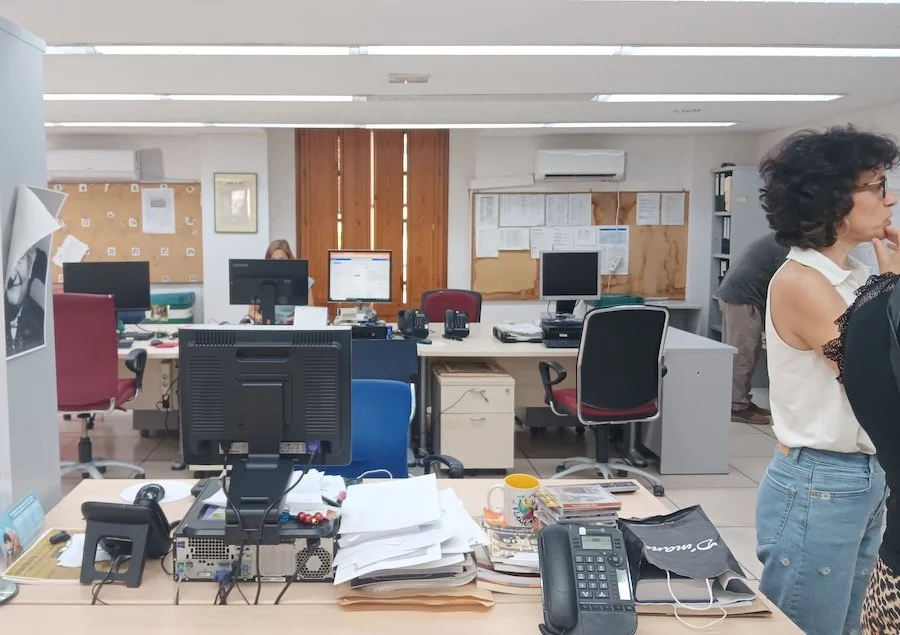
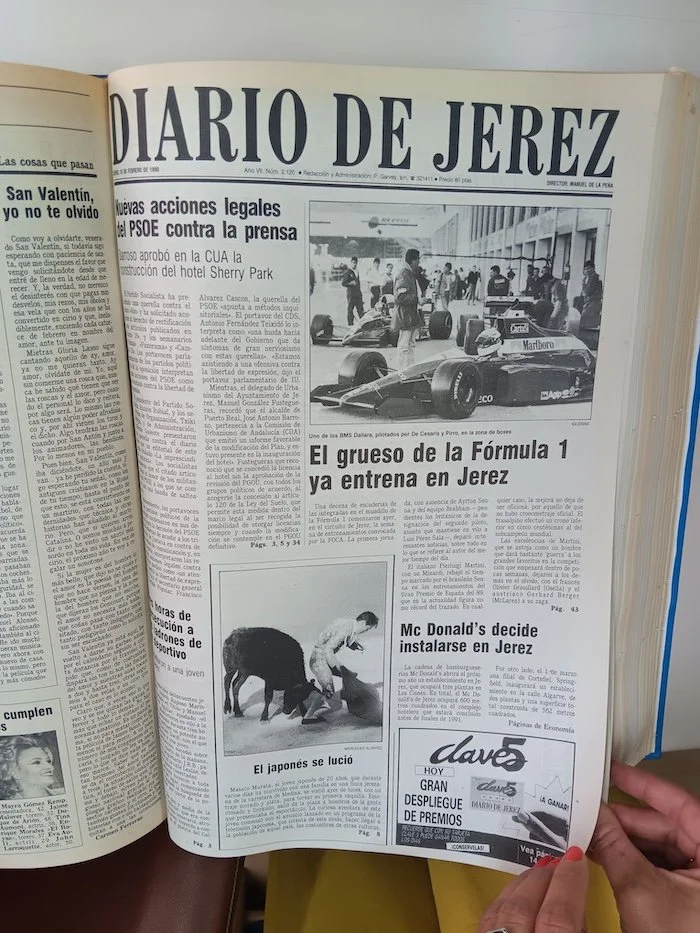
Actually I think that as journalism goes these guys have one of the best jobs around. National elections and potholes aside, there’s always something happening in Jerez and the Diario team captures all of it.
Thanks for the tour, Arantxa. We owe you a coffee.
Update
Well, it turns out that we’re newsworthy too. Arantxa published a full-page spread in today’s print edition. Oops, we appear to have taken the opportunity to put the boot into Australia’s environment inaction. You can read the online version here (your browser should have a translate button).